Mera Peak Climbing – 6 days

  • Duration 6
  • Destination Nepal
  • Trip Grade Slightly Difficult
  • Starts at Kathmandu
  • Ends at Kathmandu
  • Meals Breakfast/Lunch/Dinner
  • Accommodation Teahouses,Tented Camps
  • Max. Altitude 6,476m
  • Activity Peak climbing
  • Group Type Mountainner
  • Group Size 1-12
  • Best Season Autumn (September to November)
Highlights

This will allow us to sample a true ‘wilderness experience’ en route to Mera.Mera Peak (6461m) is the highest trekking peak in Nepal and a suitable challenge for a first-time climb in the Himalaya. Our specially devised itinerary allows optimum time for building fitness and acclimatisation – key factors that have contributed to our success record. On our trek – that leads though the traditional Sherpa villages of the Solu Khumbu and the blue pine and rhododendron forest trails of the Hinku Valley – you appreciate why we have selected this magnificent approach to the base camp. Fully acclimatised we ascend to a high camp just below Mera La and prepare for our attempt on the main summit of Mera Peak. Mera Peak Climbing is not technically demanding and unequalled views of Everest, Lhotse and Makalu will more than satisfy your aspirations on this fine Himalayan climb.

Mera Peak Climbing – 6 days Overview

Mera Peak climbing is one of Nepal’s most thrilling and popular high-altitude adventures, standing proud as the country’s highest official trekking peak at an impressive elevation of 6,476 meters (21,246 feet) in the Mahalangur section of the Himalayas. Located in the serene and less-crowded Hinku Valley, the journey to the summit blends pristine wilderness trekking with a non-technical mountaineering experience, making it an ideal choice for fit trekkers looking to step into the world of high-altitude alpine climbing.

The route leads you through dense rhododendron and pine forests, past remote Sherpa villages, and across rugged glacial moraines before reaching the snow line, offering a deep immersion into the raw beauty and culture of eastern Nepal.

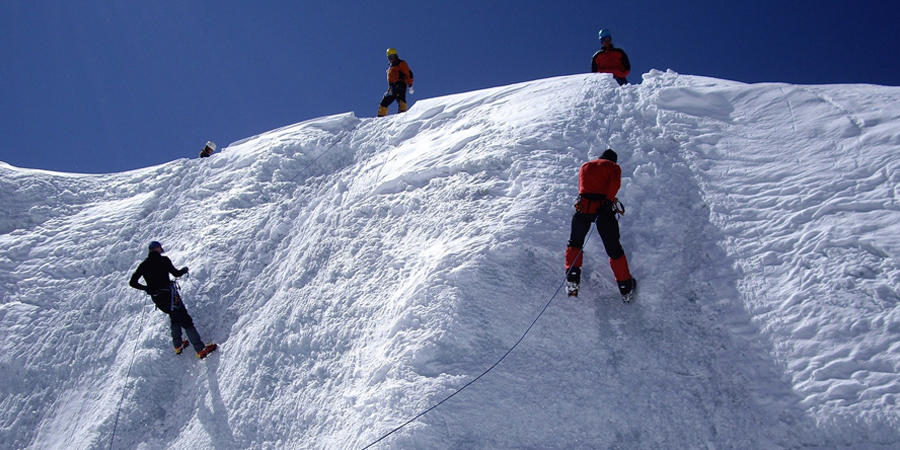
What truly sets Mera Peak apart is its straightforward, relatively gentle glacier walk to the top, which primarily requires basic mountaineering skills like using crampons, an ice axe, and being roped together to navigate snow slopes safely. Despite its technical accessibility, the sheer altitude makes it physically demanding, requiring excellent cardiovascular fitness and a careful acclimatization schedule to combat the thin air.

The ultimate reward comes at the summit, which serves as one of the most spectacular vantage points in the entire Himalayas. From the top, climbers are treated to a breathtaking, panoramic sweep of five of the world’s fourteen highest 8,000-meter peaks: Mount Everest, Lhotse, Cho Oyu, Makalu, and Kangchenjunga, creating an unforgettable milestone for any adventurer.

 

Day to Day Itinerary
Expand all

Arrival in Kathmandu. You will be met, greeted and transported to the hotel.

Free for Kathmandu city sightseeing tour, enjoy the day in Kathmandu – Nepal ‘s capital city and prepare for the next day’s Mount Everest trek. Overnight at hotel.

This day we will walk for about  5/ 6 hours through slightly straight trail and mostly uphill trail. There we will find normal lodge.

This day we will walk for about 7/ 8 hours to reach Thuli Kharka. First we will walk for 4 hours through mostly uphill trail through glaciers. After crossing glacier we will walk through downhill trail to reach Thuli Kharka. Overnight at lodge

This day we will walk for about 4/5 hours to reach Kothe through zig zag trail on the way we will also cross jungles. Overnight at lodge

This day we will walk for about 4 hours along riverside through uphill trail to reach Tangnag. Overnight at lodge.

Cost Includes
  • Permits and Paperwork: All necessary local government fees, including the Mera Peak Climbing Permit from the Nepal Mountaineering Association (NMA), local Hinku Valley entry fees, and Makalu Barun National Park entry permits.

  • Flights & Domestic Transfers: Round-trip domestic flights between Kathmandu (or Manthali/Ramechhap) and Lukla, along with airport transfers.

  • Accommodation: Standard hotel stays in Kathmandu (usually twin-sharing with breakfast) before and after the trek, local teahouse accommodation during the trekking phase, and high-quality, cold-weather alpine tents at Base Camp and High Camp.

  • Meals: Three hot meals a day (breakfast, lunch, and dinner) during the trek and climb, along with hot drinks (tea, coffee) and boiled purified water at camp.

  • The Expedition Crew: A fully licensed, English-speaking mountaineering guide (Sherpa), a helper guide for larger groups, an experienced camp cook, and porters to carry your heavy duffel bags (usually up to 15kg per trekker).

  • Group Climbing Gear & Safety: High-quality group equipment such as dynamic main ropes, fixed ropes, snow bars, ice screws, cooking utensils, fuel, a comprehensive first-aid medical kit, and a satellite phone for emergency communications.

Cost Excludes
  • International Travel: Your international flights to and from Kathmandu, and the cost of your Nepal Entry Visa (which can be obtained on arrival at Tribhuvan International Airport).

  • Personal Climbing Gear & Clothing: Your personal mountaineering equipment (such as plastic climbing boots, crampons, harness, ice axe, jumar, and helmet) and high-altitude clothing (down jacket, four-season sleeping bag, thermal layers). Note: These can easily be rented in Kathmandu or Khare.

  • Travel & Rescue Insurance: A mandatory travel insurance policy that specifically covers high-altitude trekking and mountaineering up to 6,500 meters, including emergency helicopter evacuation.

  • Tipping and Gratitude: Tips for your climbing Sherpa, trekking guides, cook, and porters. While optional, tipping is deeply ingrained in the Nepali trekking culture as a way to show appreciation (typically budgeting $150 to $250 USD total for the crew).

  • Personal Expenses & Luxuries: Soft drinks, bottled mineral water, alcohol, specialty coffees, snacks/energy bars, hot showers in teahouses, Wi-Fi access cards, and device charging fees.

  • Contingency Costs: Any expenses incurred due to flight delays (very common for Lukla), bad weather, sickness, or early return from the mountain.

Departure Dates
Useful Info

The standard Mera Peak climbing itinerary spans 14 to 18 days, a timeframe designed to handle the massive elevation gain safely and ensure proper acclimatization. The adventure begins with a thrilling domestic flight from Kathmandu to the mountain airstrip at Lukla (2,860m). From Lukla, instead of following the crowded highway toward Everest Base Camp, the trail immediately branches off into the rugged and isolated Hinku Valley. The initial trekking phase challenges you right away with a steep crossing over the Zatrwa La Pass (4,610m) before dropping down into the dense pine and rhododendron forests of Kothe (3,600m), where the dramatic southwest face of Mera Peak first reveals itself.

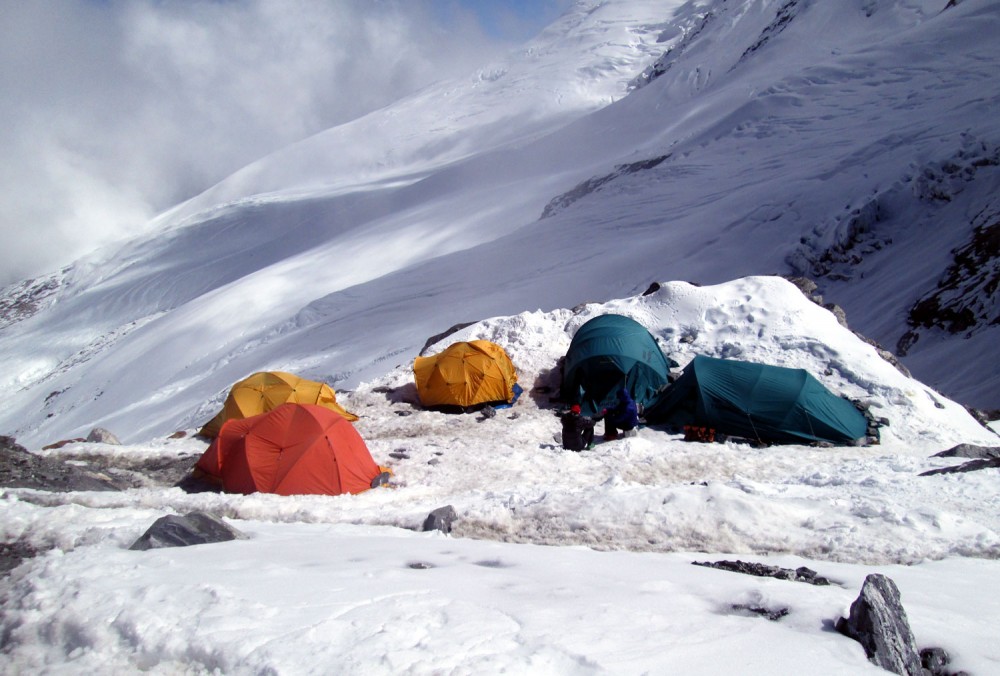
As you push deeper into the alpine zone, the trek follows the raging Hinku River up to the summer yak pastures of Thaknak (4,350m) and eventually reaches Khare (5,045m), the main staging hub for the climb. In Khare, expeditions build in a mandatory rest and training day where guides teach you how to use crampons, ice axes, harnesses, and jumars on the nearby ice slopes. Leaving the comfort of permanent teahouses behind, you then move onto the glacier, ascending past Mera La Pass (5,415m) to set up a tented camp at Mera High Camp (5,780m). Perched on a dramatic rocky shelf, High Camp serves as the launching pad for the grueling midnight summit push, culminating in a spectacular, steady glacier walk to the highest point at 6,476 meters before retracing your steps back down the valley.

FAQs
  • No. The Government of Nepal and the Nepal Mountaineering Association (NMA) strictly mandate that all foreign climbers hiring trekking peak permits must be accompanied by a licensed, registered local guide. Independent solo climbing is illegal, and checkpoints at Lukla and Khare will turn you back immediately.

  • The NMA issues permits based on a seasonal tier system. The cost per person drops drastically outside of the highly popular spring window:

    • Spring (March – May): $250 USD

    • Autumn (September – November): $125 USD

    • Winter & Summer (Off-peak): $70 USD

  • Mera Peak has a remarkably high success rate of around 85% to 90% during peak seasons. Because the climb lacks technical vertical ice walls, the vast majority of climbers who fail do so due to poor acclimatization (rushing the itinerary), unexpected mountain weather windows slamming shut, or a lack of physical stamina.

  • Strictly speaking, no. You do not need to have summited prior alpine peaks or know advanced rope management. However, you should have solid multi-day trekking experience at high altitudes (such as Everest Base Camp or the Annapurna Circuit) so you already know how your body handles elevations above 4,000 meters.

    • Electricity: Teahouses charge $2 to $5 USD per device via their solar networks up until Khare. There is zero electricity at High Camp. Bring a heavy-duty, cold-resistant power bank (20,000mAh minimum) and keep it inside your inner jacket pockets or sleeping bag so the freezing cold doesn’t drain it.

    • Network: An Ncell or NTC SIM card will give you intermittent cellular data up through sections of the Hinku Valley, but connectivity is completely non-existent once you step onto the high glacier. Teahouses sell local satellite Wi-Fi data cards (like Everest Link) for basic text messaging.

You May Also LikeSimilar Itineraries
Mananslu Base Camp Trek – 17 days Featured
Mananslu Base Camp Trek – 17 days
Difficulty: Challanging 17 Days
Max. Height: 8,163 m

US $2,800USD

Upper Dolpo Trekking – 24 days
Difficulty: Challanging 24 Days
Max. Height: 5,375 m

US $6,500USD

Australin Camp Dhampus Trekking – 4Days
Difficulty: Moderate 4 Days
Max. Height: 2,100 meters

US $380USD

Khopra Trekking – 13Days
Difficulty: Moderate 13 Days
Max. Height: 3,660 m

US $900USD

Everest Three Passes Trekking – 23 Days
Difficulty: Hard 23 Days
Max. Height: 5,643 m

US $2,400DSD

Gokyo Lake-Cho La Pass-Everest Base Camp Trek – 18 days
Difficulty: Hard 18 Days
Max. Height: 5,545 m

US $2,000USD