Gokyo Lake-Cho La Pass-Everest Base Camp Trek – 18 days

  • Duration 18
  • Destination Nepal
  • Trip Grade Hard
  • Starts at Kathmandu
  • Ends at Kathmandu
  • Meals B/L/D
  • Accommodation Teahouse,Lodge
  • Max. Altitude 5,545 m
  • Activity Trekking
  • Group Type Trekkers
  • Group Size 1-15
  • Best Season Autumn (October – November)
Highlights

The Gokyo–Cho La Pass–EBC circuit is essentially a “greatest hits” reel of the Khumbu region. Because it links two distinct valleys via a high mountain pass, the scenery shifts constantly, offering a much richer variety of landscapes than the standard linear EBC trek.

1. The Six Sacred Gokyo Lakes

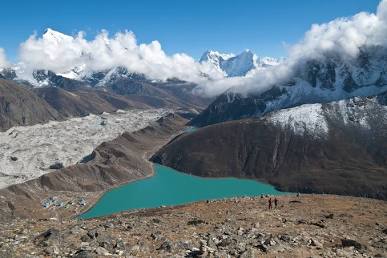
Sitting quietly at around 4,700 to 5,000 meters, these are some of the highest freshwater lake systems in the world. The intense, deep turquoise color of the water—caused by fine glacial flour suspended in the liquid—contrasts sharply with the harsh gray moraines and towering white peaks surrounding them.

2. The Epic Panoramas from Gokyo Ri & Kala Patthar

You get two distinct, world-class viewpoints on this trek, and they offer entirely different perspectives:

  • Gokyo Ri (5,357 m): Renowned for offering the most expansive wide-angle view in the Himalayas. From the top, you can see four of the planet’s fourteen 8,000-meter peaks at once: Mount Everest, Lhotse, Makalu, and Cho Oyu.

  • Kala Patthar (5,545 m): While you can’t see the summit of Everest from Base Camp itself (due to the massive shoulder of Nuptse), climbing Kala Patthar puts you face-to-face with it. The classic pre-dawn push rewards you with the iconic view of the sun rising directly behind the world’s highest peak.

3. Standing at Everest Base Camp (5,364 m)

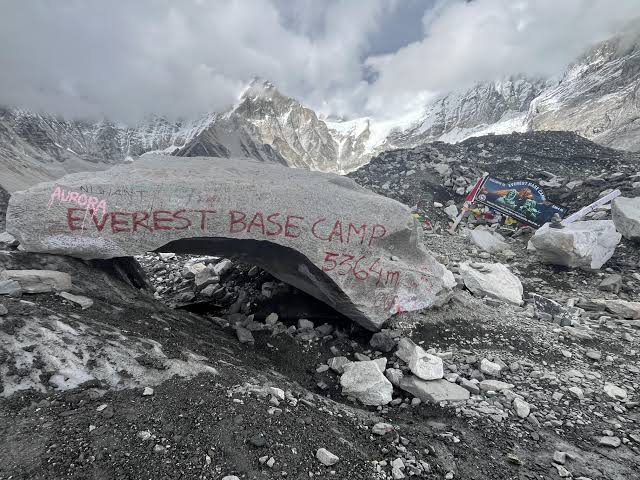
Reaching the iconic, spray-painted boulder at EBC is a massive milestone. You will find yourself standing directly on the shifting Khumbu Glacier. If you trek during the spring season, the area transforms into a vibrant, bustling tent city filled with international expeditions, gear grids, and climbers preparing for their summit bids right next to the jagged walls of the infamous Khumbu Icefall.

4. The Glaciated Traverse of Cho La Pass (5,420 m)

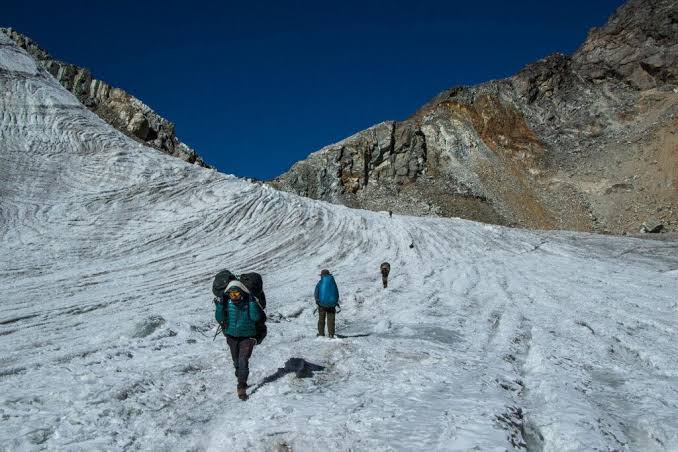
The pass is an adrenaline highlight in its own right. It tests your grit with a steep scramble up loose rock on the western side before opening up into a literal walk across a high-altitude glacier. Navigating the slick, ancient ice field while surrounded by sheer rock walls feels like entering an entirely different, frozen world.

5. Walking Alongside the Ngozumpa Glacier

As the longest glacier in the entire Himalayas, walking across and alongside its massive lateral moraines gives you a front-row seat to the raw power of moving ice. You will hear the occasional deep rumble and crack of rock and ice shifting within the moraine, a stark reminder of the living geology of the region.

6. Sherpa Culture & Tengboche Monastery

Beyond the ice and rock, the trail introduces you to the deep cultural heartbeat of the Khumbu. You will pass through traditional stone villages, walk past intricate Mani walls (carved prayer stones), and cross iconic suspension bridges draped in fluttering prayer flags. A major highlight is visiting Tengboche Monastery, the spiritual center of the Sherpa community, perched dramatically on a high ridge framed by the jagged silhouette of Ama Dablam.

 

Gokyo Lake-Cho La Pass-Everest Base Camp Trek – 18 days Overview

The Gokyo Lake – Cho La Pass – Everest Base Camp (EBC) Trek is arguably the most spectacular circuit in the entire Khumbu region. By combining the pristine, turquoise glacial lakes of the Gokyo Valley with the classic base camp route, it offers a complete, high-intensity Himalayan experience.

An 18-day itinerary is the absolute sweet spot for this loop. It gives your body the required time to acclimatize properly before attempting the massive high-altitude highlights: Gokyo Ri (5,357 m), the crossing of Cho La Pass (5,420 m), Everest Base Camp (5,364 m), and the ultimate sunrise viewpoint at Kala Patthar (5,545 m).

Day to Day Itinerary
Expand all

Our Himalaya Message Adventure Company Airport Representative will meet you outside the Terminal Hall. Please, look for our Company play card. Transfer to hotel, introduce your trekking guide and check the necessities. Afternoon stroll Tourist colourful market Thamel down town.

Overnight in Kathmandu at 3 star Hotel with breakfast

After breakfast, proceed for sightseeing tours to world heritage sites of Pashupatinath Temple-the holiest Hindu Temple on the bank of sacred Bagmati River, Bodhanath Stupa-the biggest Buddhist Stupa architecture in the world!  Patan Durbar Square is the oldest city in the Kathmandu valley with age old tradition also called Lalitpur-the city of fine arts. The visit covers the Durbar Square, the Krishna temple, the Kumbheswore temple, the Golden temple and many more. Swayambhunath Stupa-the 2000 years old legendary stupa on the hillock also nick-named as monkey temple. Your day tour ends Kathmandu Durbar Square Showcasing living goddess Kumari Temple, Nautale Durbar, the Kaal Bhairav, the Swet Bhairav, the freak Street and more.

Overnight in Kathmandu at 3 star Hotel with breakfast 

After breakfast, transfer to the Domestic Airport for the Trans Himalayan flight and dramatic landing on the hillside at Lukla: gateway to the Khumbu/Everest region. Meet your local porters and walk downhill to the Sherpa settlement of Cheplung. The trail then follows the side of the Dudh Koshi Valley before ascending to Ghat (2,530m/8,350ft). Another gentle hour leads up to Phakding.

Overnight in Phakding at Lodge
Meals: Breakfast, Lunch & Dinner

The trail meanders through pine forest, along the Dudh Koshi River, crossing suspension bridges via the Sherpa villages of Benkar, Chumoa, Monjo and Jorsale: entrance to the Sagarmatha National Park and permit checkpoint; with tranquil views of glistening Thamserku (6,618m/21,714m). The trail continues along the riverbed to the confluence of the Bhote and Dudh Koshi Rivers. It then climbs steadily, crossing the high Tenzing- Hilary suspension bridge: with inspiring glimpses of Everest and the Nuptse – Lhotse ridge. A final three hour ascent through pine forest leads to the prosperous trading and administrative town of Namche Bazaar.

Overnight in Namche Bazaar at Lodge
Meals: Breakfast, Lunch & Dinner 

This is a scheduled acclimatization day on the trek. Acute Mountain Sickness (AMS) and health experts recommend a stop for at least one extra night. Be active and roam rather than laze around: climb high and sleep low is the acclimatisation advice.

Namche Bazaar has ATMs, cyber cafés, delicious restaurant food and bakeries, plus a colourful market each Friday evening and Saturday morning. Visit the Sagarmatha (Everest) National Park Visitor’s Centre on the hillock: with informative displays on Sherpa culture, local flora and fauna.

Take an entertaining side trip to the large traditional Sherpa village of Khumjung (3,780m/12,402ft): with fine views of Thamserku, Kangtega, Ama Dablam and Everest – in a sea of lesser peaks. Return to Namche Bazaar for the night.

An alternative five hour walk northwest of the town, to Thame (3,820m/12,533ft) below the impressive 6,187m/20,300ft Kongde Ri ridge, offers panoramic Himalayan views not seen on the EBC route.

Meals: Breakfast, Lunch & Dinner

The trail climbs up from the town and then contours around the hillside, offering great views including Everest and Khumjung. Look out for spotted deer, Himalayan tahrs and birds – including the colourful (male) Danphe pheasant (Nepal’s national bird). The trail rises to Sanasa where the routes to Gokyo and Everest BC fork. The trail to the right then descends to cross the Dudh Koshi (past water driven prayer wheels) on a suspension bridge near Phunki Thenga (3,250m/10,663ft), the lowest point north of Namche Bazaar. It then enters the Imja Khola Valley and rises steeply, through dwarf conifers and rhododendron forest, for a two hour pull, to the hilltop village of Tengboche.

Their famous Gompa is set against the backdrop of Ama Dablam, Nuptse, Everest, Kangtega and other peaks. At full moon in October/November they hold the colourful Mani Rimdu festival which includes masked dancing and Tibetan Opera in the monastery courtyard. Visit the monastery during the afternoon.

Overnight in Tengboche at Lodge
Meals: Breakfast, Lunch & Dinner 

Today’s trail descends to Debuche: a scattered stone village with a nunnery, chortens and long mani wall. Cross the suspension bridge over the Imja Khola and gradually ascend to Pangboche with views of towering Ama Dablam (6,856m/22,495ft perhaps the most beautiful mountain in the Everest region). The trail then follows the river fairly closely as it gradually rises to its confluence with the Lobuche Khola and continues up to Dingboche: the last year-round Sherpa settlement in the region. Different views of Ama Dablam rise above the terraced fields of barley, buckwheat and potatoes. The fields are walled to protect crops from icy winds and animals during the short growing season.

Overnight in Dingboche at Lodge
Meals: Breakfast, Lunch & Dinner

This is another scheduled rest day on the trek and will assist your fitness and oxygen intake at the higher altitudes to follow. An enjoyable 3-4 hrs side walk, 400m climb to Nangkartshang Gompa, on the ridge north of Dingboche village can be the best choice. This vintage point offers Mt. Makalu (8,463m) fifth highest Mountain in the world to the east and awesome view of Mt. Ama Dablam and valley floor. If you have more energy, continue to Nangkartshang Hill summit (5090m) for additional adventure and thrill.

Return from the rarefied air to Dingboche for the night
Meals: Breakfast, Lunch & Dinner 

The trail climbs to a ridge providing towering views of Taboche Peak and Cholatse and continues through Yak pastures before crossing a wooden bridge over a roaring stream to Duglha (4,620m/15,158ft). The trail then ascends steeply for an hour, up the gravely terminal moraine of the Khumbu Glacier. On the summit is a large group of stone-pile memorials to lost Sherpas and climbers. It also affords great border-views including Khumbutse, Lingtren, and Pumori. Everest is hidden behind the towering wall of Nuptse and Lhotse. Follow the valley upstream for about an hour to Lobuche.

Overnight in Lobuche at Lodge
Meals: Breakfast, Lunch & Dinner 

A long but rewarding day. Follow the windblown and rocky path along the barren moraine of the Khumbu Glacier to the last village at Gorak Shep. After an early lunch, set out on the feint trail to the world’s highest Base Camp, on the Khumbu Glacier: opposite the dreaded icefall – the most dangerous section of an Everest ascent.

In April/May the trail is busy with porters carrying in supplies and the site is a riot of colourful tents perched on the dirty ice. For the rest of the year it is a bleak and lonely place set below the impressive ice walls (and avalanches) of the Mahalangur Himal along the Tibetan border. From west to east, the main peaks are Pumori, Lingtren, Khumbutse and Nuptse.  Everest and the Cwm are hidden behind buttresses.

Trek back to Gorak Shep for the night
Meals: Breakfast, Lunch & Dinne

The trail climbs 2/3 hrs. up to Kala Patthar (5545 m/18192 ft) early in the morning to see first day sun light from top of the world (Mt. Everest) This is milestone of the trek to inspect panoramic view with the fantastic sunrise over Mt. Everest, Mt. Pumori, Mt. Lingtren, Khumbutse, Changtse, Mt. Lhotse, Mt. Nupte, Mt. Ama Dablam and many more After accomplish Kala Patthar, trek down to Gorakshep and retrace down to Lobuche. After Lunch, the path to Dzonglha branches off from the main trail some distance from Lobuche. After crossing a stream we come through a fork and later curving round to the wide gravelly river bed of the stream as it flows southwestward, the trail runs across it and climbs the ridge ahead. From the grassy ridge ahead, as the trail runs across to southeast from where we can see soaring heights of Ama Dablam and Kangtega-Thamserku while Tawache looms prominently ahead. Pheriche village is also visible down in the valley floor. As the ridge veers northward, the vast Cho La Lake spreads below Mt. Cholatse . The lake stays with us over a long stretch until we descend to a wide basin. The trail climbs up a spur and descends steeply to another broad basin. After an hour walk transverse from the basin and shortly after crossing a wobbly bridge, we reach Dzonglha.

Overnight in Dzonglha at Lodge
Meal: Breakfast, Lunch & Dinner 

Early morning as we get out of our lodge we are greeted by the mesmerizing sight of Cholatse looming over. Today is going to be one of the toughest days of our trip. The walk begins as we transverse through a spur extending westward from Dzongla. The path descends to a basin across which meanders a murmuring stream crusted with ice at places. In about an hour, we reach the top of the basin readying for the triumph on ChoLa. As we gain height, the view back gets increasingly more captivating; the Cho La Lake begins to appear and the Ama Dablam in its pyramidal incarnation presides over a range of mountains on the south as Cholatse soars on the west. Climbing the incline is not easy; it is steep, but made worse by boulders over some of which we will have to scramble. We need to be alert as rocks can be glazed by ice. The final climb to the ChoLa can be a little tricky as the trail curves round the bergschrund. Upon reaching the top, we see prayer flags, strung across cairns, flapping in the strong wind. Scenery of majestic peaks in all directions is breathtaking. Although long, the path leading down to Thangnak can be easily made out from the pass because it is just decent but can be hazardous if rocks are glazed by ice, a bit of cautiousness is needed. We reach Thangnak, a rather more substantial hamlet with a small village. Stepping out of the settlement, we are greeted by fabulous mountain views. The trail brings us to the Ngozumpa glacier edge after short walk, which is longest glacier in Nepal. Reaching the other side of the glacier, we get view of the second of the Gokyo lakes on the series of six lakes. A short distance away is the third Gokyo Lake. On the edge of this lake stands the Gokyo Village where we finally give rest to our tired body.

Overnight in Gokyo at Lodge
Meal: Breakfast, Lunch & Dinner 

The views in the Gokyo region are tremendous. For the best view, climb Gokyo Ri (5350 m) the small peak above the lake. The peak of 5350m is sometime called Kala Pathar (not to be confused with the Kala Pathar above Gorakshep, though the view is similar) It is a two- hours climb to the top of the peak, providing a panoramic view of Cho Oyu, Gyanchung King, Everest, Lhotse, Makalu, Cholatse, Tawache and many more. Those with more time and energy can make a trip up the valley to another lake, marked with the name Ngazumpa on the maps, or even beyond to a fifth lake. There are several small peaks in this in this region that offer vantage points for the surrounding peaks and views of the Nangpa La, the old trade route into Tibet.

Overnight in Gokyo at Lodge
Meal: Breakfast, Lunch & Dinner

Rather than retrace the upward route, follow the eastern side of the valley to gain different views of Khumbila. This path also offers warmer weather, as the sun stays on these slopes longer in the late afternoon.

Overnight in Phortse at Lodge
Meals: Breakfast, Lunch & Dinner 

A slippery trail descends from Phortse to the bridge at Phortse Thenga and then rejoins the original route from Khumjung. It is easy to reach Namche Bazaar and then descend to the Dudh Koshi for a lower final night.

Overnight in Monjo at Loge
Meals: Breakfast, Lunch & Dinner 

After breakfast retrace your steps to Phakding, cross the suspension bridge at Thado Koshi, walk on to Cheplung and round off the adventure with the final 700m/2,300ft, 35min ascent to Lukla: and say goodbye to your porters.

Overnight in Lukla at Lodge.
Meals: Breakfast, Lunch & Dinner 

After an early breakfast, take the return flight to Kathmandu. Transfer to your hotel. Rest of day free. Overnight in Kathmandu at 2 star Hotel.

Meals: Breakfast 

Transfer to Tribhuvan International Airport for your onward flight to your next destination.

Meals: Breakfast  only

Cost Includes
  • All airport transfers
  • 2 star Hotel in Kathmandu for 3 nights with breakfast
  • Flights Kathmandu–Lukla–Kathmandu (Weight limit:10 kg main baggage and 5 kg hand per passenger/flight)
  • All airport taxes
  • All necessary paper work and trekking permits (National Park permit and TIMS)
  • An experienced English-speaking Govt. registered trekking guide and local porters to carry luggage (2 trekkers: 1 porter)
  • Guide and porter salaries, insurance, equipment, transport, food and lodging
  • Full meals (Breakfast, Lunch and Dinner) followed by cup of Tea/Coffee during the trek
  • Supplementary snacks (cookies and energy bar)
  • Fruit desert every day after dinner
  • Iodine/Chlorine treated safe drinking water
  • A comprehensive medical kit
  • All government and local taxes
  • Trekking equipment such as down filled sleeping bag, down jacket, walking poles and duffel bag
Cost Excludes
  • Lunch and dinners in Kathmandu
  • Deserts (cakes, bakes and pies)
  • Additional Hot Drinks
  • Bottled drinks
  • Boiled water
  • Electronic device re-charge
  • Hot shower
  • Wi-Fi
  • Personal expenses
  • Travel insurance and evacuation insurance
  • Tipping
Departure Dates
Useful Info

Meals

Eating is a big part of Holiday. Travelling with Himalaya Message Adventure, you experience the vast array of wonderful food Nepalese, Chinese, Continental, Italian and several local cuisines. Breakfast, Lunch & Dinner are included in the package. Your guide will suggest delicious, hygienic and each place special food during your trip. Mountain restaurant owner prefer not to order many dishes and waste food as they would like to cater more trekkers with limited food before run off stuck. Its a week or more days hard work to porters and caravans to bring food to these places. During this trek you will usually have breakfast and dinner at the same Lodge, lunch will be eaten at one of the trail side restaurants en-route.

Drinking water:

Himalaya Message Adventure provides unlimited chlorine/Iodine treated water during the trek. All tea houses have mineral water and boiled water for trekkers upon additional cost. We discourage the purchase of Mineral water and bottled water while on the Trek as plastic bottles aredifficult to dispose off and have become an environmental problem

What to take

This is a very active trip, meaning you will be on the move most of the time, so pack as lightly as possible. We provide one porter for every two travellers; your trekking gear will be carried by the porter in a duffel bag that we will provide. The maximum the porters are allowed to carry 15 kgs per trekker means 30 kgs from 2 trekkers . Unnecessary luggage can left in Kathmandu Hotel and its absolutely free of cost. .

Important to note:

Please read the Checklist section of this trip notes for additional details of what you need to bring for the trek on this trip. You will need to bring a comfortable medium sized day pack to carry the things that you will need during the day. This should have a waist strap or (better) a padded waist belt. The weather is subject to change in high altitude so layered clothing is recommended throughout the year.

FAQs
    • What happens if I get severe Acute Mountain Sickness (AMS) or injured? The guide will assess you immediately. For mild symptoms, you will descend on foot or by horse to a lower altitude (like Pheriche or Machhermo, which have medical clinics). For severe cases, the agency will coordinate an immediate Emergency Helicopter Evacuation to a hospital in Kathmandu.

    • Does the agency provide insurance? No. Trekking companies do not provide personal insurance. You must buy your own policy independently. It is non-negotiable that your policy covers medical expenses and helicopter rescue up to 6,000 meters.

    • What is the guide-to-client ratio, and are they licensed? A reputable agency uses government-licensed trekking guides who speak fluent English and have specific high-altitude first-aid training. Typically, there is one main guide for groups up to 8 people, and assistant guides added for larger groups.

    • How much weight does a porter carry? By local labor guidelines, a single porter carries a maximum of 30 kg (66 lbs). Typically, one porter is assigned to two trekkers, meaning your duffel bag must not weigh more than 15 kg (33 lbs). You will carry your own small daypack (5–7 kg) with daily essentials.

    • What happens if the Kathmandu–Lukla flight is cancelled due to weather?

      Lukla flights are notoriously weather-dependent. If planes are grounded, you wait for the next clear window. If cancellations drag on and threaten your itinerary, the agency can arrange a helicopter charter, though this costs an extra $350 to $500+ USD out-of-pocket per person.

    • Do flights operate from Kathmandu or Ramechhap?

      During peak seasons (Spring and Autumn), the government frequently diverts all Lukla flights to Ramechhap Airport to avoid traffic congestion in Kathmandu. This means your agency will arrange a 4 to 5-hour drive from Kathmandu to Ramechhap at 2:00 AM on Day 2.

  • “Is a pulse oximeter and portable oxygen cylinder included in our group kit for the entire trek?” Why it matters: Cheap companies save money by omitting oxygen bottles. On a route that crosses Cho La Pass and spends a week above 4,400 meters, having an oximeter to check your blood oxygen daily and emergency oxygen on standby can save your life.

    2. “If Cho La Pass is blocked by heavy snow or ice, what is our alternative plan, and are there extra costs?” Why it matters: If the pass is impassable, a professional guide will safely pivot your route back down and around via Phortse to connect to the EBC trail. Ensure the agency covers the altered teahouse logistics without charging you “route change fees.”

    3. “Are the domestic flight tickets to Lukla included in your quote, and are they refundable if the trek is canceled?” Why it matters: Some ultra-budget quotes hide the flight cost ($360+ USD return) in the fine print. Ensure flights are fully integrated into the package price.

    4. “What is your tipping policy, and what is the standard recommended tip for the crew?” Why it matters: Clear communication prevents awkwardness on Day 16 in Lukla. A transparent company will give you a clear, honest benchmark rather than saying “up to you.”

    5. “Do your guides carry a satellite communication device or a local satellite phone link?” Why it matters: Cellular networks (Ncell/NTC) have massive dead zones in the deep valley folds of the Gokyo side and right around Cho La Pass. In an emergency, your guide needs a reliable way to call for a helicopter rescue.

You May Also LikeSimilar Itineraries
Mananslu Base Camp Trek – 17 days Featured
Mananslu Base Camp Trek – 17 days
Difficulty: Challanging 17 Days
Max. Height: 8,163 m

US $2,800USD

Upper Dolpo Trekking – 24 days
Difficulty: Challanging 24 Days
Max. Height: 5,375 m

US $6,500USD

Australin Camp Dhampus Trekking – 4Days
Difficulty: Moderate 4 Days
Max. Height: 2,100 meters

US $380USD

Khopra Trekking – 13Days
Difficulty: Moderate 13 Days
Max. Height: 3,660 m

US $900USD

Everest Three Passes Trekking – 23 Days
Difficulty: Hard 23 Days
Max. Height: 5,643 m

US $2,400DSD

Gokyo Lake-Cho La Pass-Everest Base Camp Trek – 18 days
Difficulty: Hard 18 Days
Max. Height: 5,545 m

US $2,000USD