Mananslu Base Camp Trek – 17 days

  • Duration 17
  • Destination Nepal
  • Trip Grade Challanging
  • Starts at Kathmandu
  • Ends at Kathmandu
  • Meals B/L/D
  • Accommodation Teahouse, Lodge
  • Max. Altitude 8,163 m
  • Activity Treking
  • Group Type Trekkers
  • Group Size 1-15
  • Best Season Autumn (September – November)
Highlights

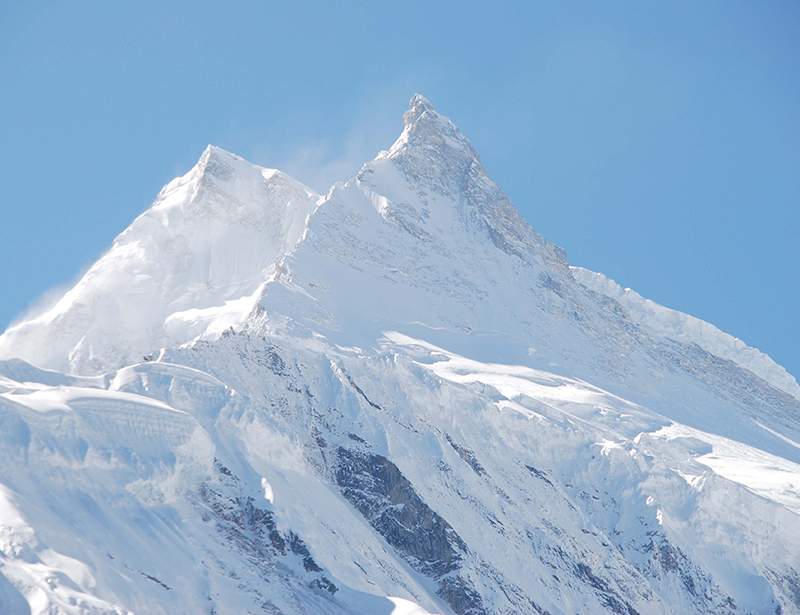
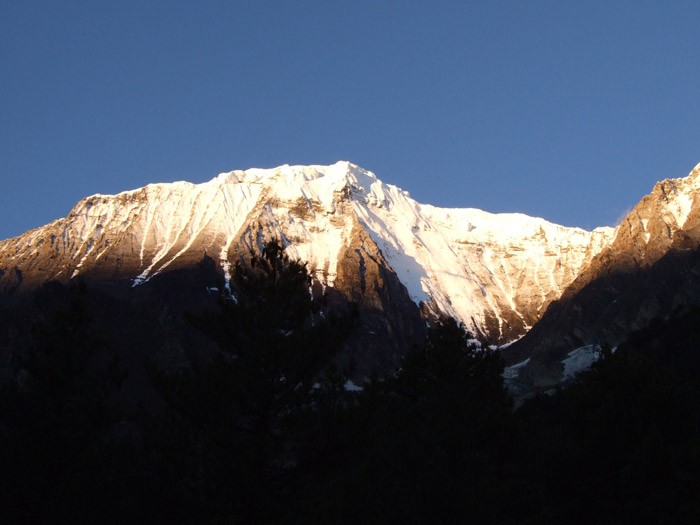
Manaslu, its name, which means “mountain of the spirit” is the 8th highest mountain in the world of the height of 8,163 m (26,781 ft) above sea level. Located in the west-central of Nepal, 40 miles east of Mt. Annapurna, Mt. Manaslu is a part of the Nepalese Himalayas in the Gurkha massif and also known as Kutung in Tibet. The journey to the top of Manaslu was stated on May 9, 1956 when two climbers Toshio Imanishi and Gyalzen Norbu scaled this mountain. The mountain’s long ridges and valley glaciers offer feasible approaches from all directions, and culminate in a peak that towers steeply above its surrounding landscape.Manaslu requires more duration than other 8000m peaks due to the long access to reach it base.  South face route to the common summit is the toughest and dangerous among the 6 routes and Northeast face route is the common and commercial route taken by the mountaineers.

Mananslu Base Camp Trek – 17 days Overview

The Manaslu Base Camp Trek is one of Nepal’s most spectacular and deeply rewarding high-altitude adventures, serving as a pristine, less-crowded alternative to the Everest and Annapurna circuits. Leading to the foot of Mount Manaslu—the world’s eighth-highest peak at 8,163 meters—this remote trek is situated within a restricted area of the Gorkha district, preserving an untouched environment and highly authentic local cultures. The journey treats trekkers to a dramatic shift in geography and lifestyle: it starts in lush, subtropical lower foothills filled with terraced fields, deep gorges, and waterfalls alongside the roaring Budhi Gandaki River, and gradually ascends into high alpine terrain where pine, oak, and rhododendron forests give way to massive glaciers and moraines.

Culturally, the route transitions from traditional Hindu and Gurung villages in the lower elevations to high-altitude settlements like Samagaun (3,530m), where the locals are of Tibetan descent, practicing ancient Tibetan Buddhism marked by vibrant prayer flags, intricately carved mani walls, and historic monasteries like Pungyen Gompa. Reaching the Manaslu Base Camp at 4,800 meters offers a jaw-dropping, close-up perspective of the towering mountain faces, icefalls, and the turquoise waters of Birendra Tal below. Typically completed as part of a 14-to-17-day loop, the adventure presents a demanding physical challenge—requiring good stamina, strict acclimatization, a mandatory licensed guide, and specialized permits—culminating in the thrilling crossing of the iconic Larkya La Pass at 5,160 meters, which offers panoramic views of the Manasiri and Annapurna ranges.

Day to Day Itinerary
Expand all

Cost Includes
  • Expedition Permit and Royalties
  • Garbage Deposit
  • National park entry permit
  • Drive KTM- Gorkha- KTM
  • Lodging & Food during Expedition and trekking to BC and back
  • 3 nights Hotel in Kathmandu on BB plan
  • Experience Climbing Guide and Sherpa
  • Base camp Kitchen staff
  • Climbing Sherpa (1member:1 Sherpa)
  • Porters/ Yak to Base camp and Back
  • Liaison Officer
  • All the staff salaries & allowances
  • All the staff insurance & Heli Insurances
  • Group Climbing gears
  • All the necessary equipment at base camp
  • 6 bottles of Oxygen(4 for the clients & 2 for Sherpa)
  • Oxygen Mask regulator set
  • Walkie talkie set for each Sherpa
  • Solar panel and generator at base camp
Cost Excludes
  • International flight to Kathmandu
  • Visa fee of Nepal
  • Lunch & dinner in Kathmandu Hotel stay.
  • Personal equipment’s.
  • Personal Insurance
  • Heli Rescue
  • Satellite Telephone
  • Personal expenses (phone calls, laundry, bar bills, battery recharge, extra porters, bottled or boiled water, shower, heater, etc.)
  • Staff Tips
  • Internet Access during the Expedition.
Departure Dates
Useful Info

Fitness
Climbing at and above 8,000 meters is inherently dangerous and is not the place to be learning mountaineering and climbing skills.Any expedition that goes to 8,000m requires a very high level of aerobic fitness. Being fit will certainly improve your chances of reaching your chosen summit. Your resting heart rate should be below 60 but preferably below 50. You should be able to run 50km on flat ground in approximately6 hours. Endurance and the ability to carry a heavy pack of up to 25kg is more important than sprint ability.
In order to get ready for this challenge, you need to be trained at least for about 8 to 12 months to prepare yourself as strong candidate. You can go to fitness center every morning for about 2 hours, do hiking every weekend with increasing weights on your pack (i.e. 10kg, 15kg, 20 kg, and up to 25kg), manage some time for cycling for couple of hours for 3 or 4 times a week.    On the summit push, extra effort is required walking on ice and climbing up to 10 – 14 hours. On our all-8000m expeditions, we supply excellent logistics; good ratios of climbing support sherpas and standard number of oxygen, which plays the vital roll for the success and safe climb of the peak.

Experience Required
Himalaya Message Adventure strongly suggest that you must climb a number of 6,000m peaks in order to gain mountaineering proficiency and also undertake a trip to one of the 7,000m peak or one of the technically difficult 6000m peak i.e. Mt. Amadablam or similar, where you experience expedition camping, higher altitude, and how to deal with the cold.If you are fit and motivated but lacked technical climbing skills or suitable experience, we have options to keep you safe and get you high. This might be a personal Sherpa or a pre-trip training course.
You must have well knowledge about using of mountaineering gears, good with rock climbing and ice climbing, will increase the chances of reaching thesummit andalso previous mountaineering experiences is mandatory but doesn’t really require any high level of technical experience.

FAQs
  • For the standard circuit, you need four specific permits. Our agency handles 100% of this paperwork for you before the trek begins. The required documents are:

    1. Manaslu Restricted Area Permit (RAP)

    2. Manaslu Conservation Area Permit (MCAP)

    3. Annapurna Conservation Area Permit (ACAP) (Required because the loop exits through the Annapurna region)

    4. Chumnubri Rural Municipality Tourism Fee

  • To file your permit applications with the Department of Immigration, we require:

    • A clear, color passport scan (valid for at least 6 months).

    • A copy of your Nepal tourist visa (or your Visa Application Submission ID).

    • Two digital passport-sized photographs.

    • Copy of your comprehensive travel insurance policy.

  • The trek is graded as challenging. You will walk for 5 to 8 hours daily over steep, rugged terrain, stone staircases, and suspension bridges. While no technical mountaineering skills (ropes or ice axes) are required, prior high-altitude trekking experience is highly recommended. The toughest stretch is crossing the Larkya La Pass at 5,160 meters, which involves a pre-dawn start in freezing temperatures and a long, steep descent.

  • We recommend starting a targeted physical training regimen 6 to 8 weeks before departure:

    • Cardio: 4–5 times a week (running, cycling, swimming, or stair-climbing) to build lung capacity.

    • Strength: Weighted squats, lunges, and step-ups to build quad and calf endurance.

    • Real-world practice: Go on weekend day-hikes carrying a 5–8 kg backpack to break in your boots and condition your shoulders.

  • If your package includes a porter, they will carry your main duffel bag. The maximum weight limit per trekker’s main bag is 15 kg (33 lbs). You will carry your own daypack (30–40L) containing items you need during the day, such as water, a rain jacket, a headlamp, snacks, and personal documents.

You May Also LikeSimilar Itineraries
Mananslu Base Camp Trek – 17 days Featured
Mananslu Base Camp Trek – 17 days
Difficulty: Challanging 17 Days
Max. Height: 8,163 m

US $2,800USD

Upper Dolpo Trekking – 24 days
Difficulty: Challanging 24 Days
Max. Height: 5,375 m

US $6,500USD

Australin Camp Dhampus Trekking – 4Days
Difficulty: Moderate 4 Days
Max. Height: 2,100 meters

US $380USD

Khopra Trekking – 13Days
Difficulty: Moderate 13 Days
Max. Height: 3,660 m

US $900USD

Everest Three Passes Trekking – 23 Days
Difficulty: Hard 23 Days
Max. Height: 5,643 m

US $2,400DSD

Gokyo Lake-Cho La Pass-Everest Base Camp Trek – 18 days
Difficulty: Hard 18 Days
Max. Height: 5,545 m

US $2,000USD