Everest Three Passes Trekking – 23 Days

  • Duration 23
  • Destination Nepal
  • Trip Grade Hard
  • Starts at Kathmandu
  • Ends at Kathmandu
  • Meals B/L/D
  • Accommodation Teahouse,Lodge
  • Max. Altitude 5,643 m
  • Activity Trekking
  • Group Type Treakkers
  • Group Size 1-15
  • Best Season Autumn (October to November)
Highlights

The Everest Three Passes Trek is the ultimate trekking circuit in the Khumbu region because it strings together all of the area’s iconic highlights into one massive, continuous loop.

Instead of just trekking up a single valley to Everest Base Camp and walking back down the same way, this route takes you through four distinct valleys, offering an incredibly diverse showcase of the Himalayas.

Here are the major highlights that make the Three Passes trek so spectacular:

1. The Three High Alpine Passes

The defining features of the trek are the three high-altitude passes, each offering a completely different challenge and visual reward:

  • Kongma La Pass (5,535 m): The highest, wildest, and most rugged of the three. It offers an intimate, up-close view of the massive Nuptse wall and a thrilling crossing over the boulder-strewn Khumbu Glacier.

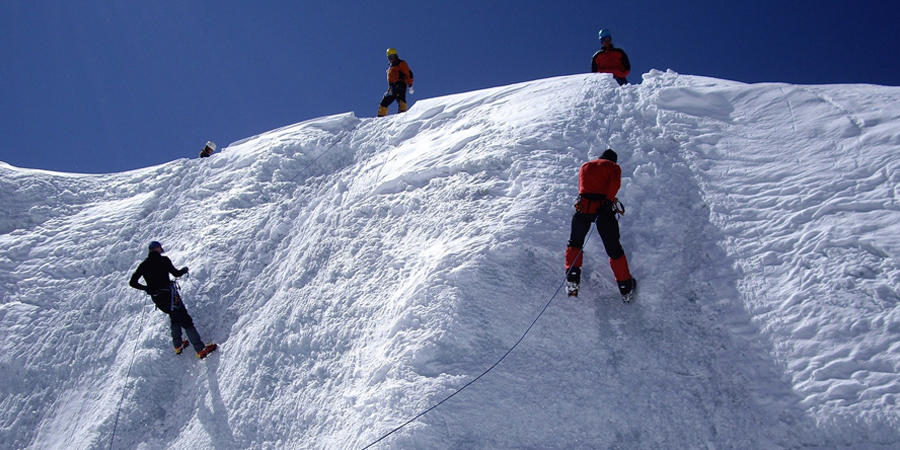
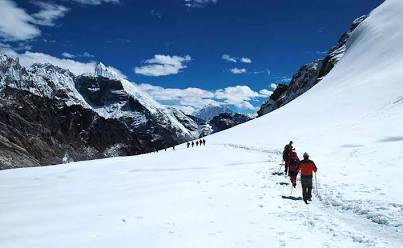
  • Cho La Pass (5,420 m): Famous for its dramatic approach and slightly technical terrain. Crossing it involves scrambling up a steep rock face and walking directly across a frozen, sloped glacier section flanked by towering peaks.

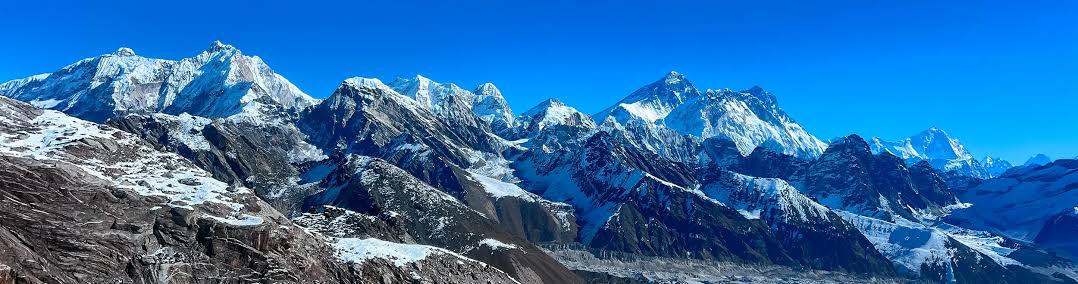
  • Renjo La Pass (5,360 m): Widely considered the most beautiful pass. When you reach the top, you are treated to a sweeping, postcard-perfect panorama that captures the turquoise Gokyo Lakes, the massive Ngozumpa Glacier, and Mt. Everest all in a single frame.

2. The “Three Peaks” Viewpoints

While standard itineraries only include one side peak, the Three Passes loop gives you the opportunity to summit three distinct, non-technical trekking peaks. Each offers a completely unique angle of the region’s giants:

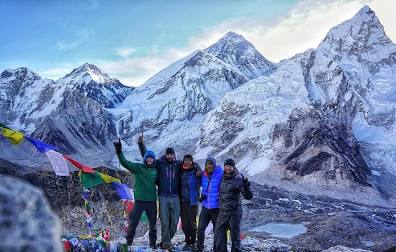
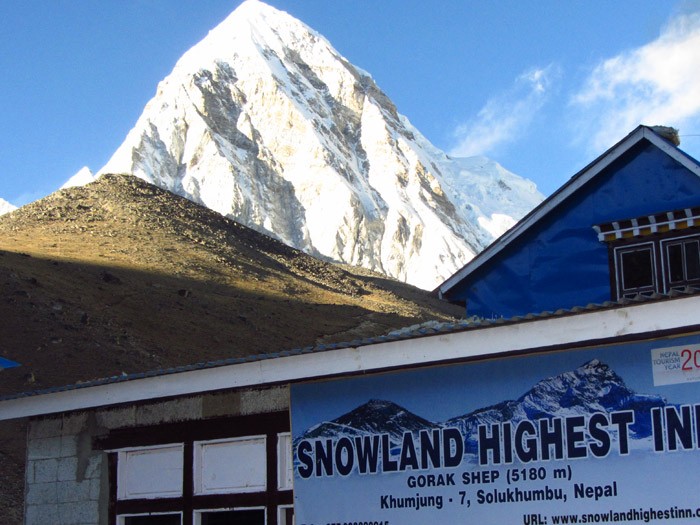
  • Kala Patthar (5,643 m): The definitive vantage point for viewing Mount Everest, Nuptse, and Changtse, located right above Gorak Shep.

  • Gokyo Ri (5,357 m): Rises directly above the third Gokyo lake, offering an unmatched perspective of four 8,000-meter peaks: Everest, Lhotse, Makalu, and Cho Oyu.

  • Chukhung Ri (5,550 m}): A quieter, often overlooked peak in the Imja Valley that sits directly beneath the staggering south face of Lhotse and looks out toward Ama Dablam.

3. The Pristine Gokyo Lakes

Rather than just looking at photos, you will get to spend a couple of days staying in the village of Gokyo, which sits right on the shores of the third lake (Dudh Pokhari). The lakes are a brilliant, piercing turquoise color, fed by the melting ice of the surrounding glaciers. You can also hike further up the valley to visit the fourth and fifth lakes for an even more remote experience.

4. Everest Base Camp (5,364 m)

You don’t have to sacrifice the classic highlights to do the loop. The circuit routes you directly through Gorak Shep, allowing you to walk right onto the edge of the active Khumbu Icefall and stand at the historic Everest Base Camp, where mountaineering expeditions pitch their tents every spring.

5. Authentic Sherpa Culture & Quicker Valleys

Because the loop extends far beyond the heavily commercialized main Everest trail, you get to experience the quieter, more traditional side of the Khumbu region:

  • Thame Village: Located in the Bhotekoshi Valley, this is a historic village untouched by mainstream crowds. It is the childhood home of Tenzing Norgay (who first climbed Everest with Sir Edmund Hillary) and Apa Sherpa. It also features a beautiful, 350-year-old cliffside monastery.

  • Lungden: A remote, high-altitude outpost that feels completely cut off from the modern world, serving as the staging ground before you cross the Renjo La.

  • Namche Bazaar (3,440 m): The vibrant “Sherpa Capital” built into a horse-shoe shaped mountain amphitheater, complete with bakeries, gear shops, and cultural museums where you’ll spend your first acclimatization days.

Would you like to explore how these highlights fit together into a classic 18-to-20-day day-by-day itinerary?

Everest Three Passes Trekking – 23 Days Overview

The Everest Three Passes Trek is widely considered the ultimate trekking circuit in the Khumbu region. Unlike the standard “in-and-out” Everest Base Camp route, the Three Passes trek forms a massive loop that connects four distinct valleys: the Bhotekoshi, Gokyo, Dudhkoshi, and Imja valleys.

It is a deeply rewarding but physically demanding undertaking, pushing you over three high-altitude alpine passes above 5,300 meters.

Day to Day Itinerary
Expand all

Upon arrival at Kathmandu Tribhuvan International Airport you will be received by our representative and transfer to Hotels over night at Hotel on BB basis.

Singhseening at world heritage sites in Kathmandu valley along with national tour guide. Meet the trekking crew members and brief about trekking.

35 minutes flight to Lukla 2,800m and trek to Phakding at 2,652m. After breakfast in the early morning you will be transferred to domestic airport. Upon arrival you will be received by our trekking guides. In Lukla you will have time to stroll around, while the Sherpa crew sort and divide the load baggage on the Ghopkyo (mix breed of Yak & normal cow, as the Yak cannot survive below 3000m) some loads are carried by porters, lunch hour depending upon the time of arrival at Lukla either in Lukla or few walks farther down on route to Phakding. The walk is gradual and most of the way, with few ups from Tarhe khola, where you can have a superb view of Kusum-Kangru 6,369m crossing a short suspension bridge, from here after a short climb brings us to the Ghat village, another 11/2hr of gradual walk brings you to Phakding village for the overnight stop near the bank of the Dudh-Kosi river.

From Phakding after crossing the suspension bridge over the Dudh-Kosi the walk is pleasant with few short uphill and downhill and re-crossing the same river again, with magnificent view of Thermasarkhu 6,608m, then reaching a small village of Monjo after the last 20 minutes climb from the stream, after Monjo, comes to the entrance of Sagarmatha National Park, from here a short descend to the Jorsalle village, the last village till Namche Bazaar is reached, the walk is pleasant on the river bed till the last bridge over the Imjatse river is reached, from here the walk is along the winding uphill path all the way to Namche Bazaar, with magnificent view of Kwangde peak, Kusum kangru Mt.Everest- Nuptse wall, Lhotse and the closer view of Taweche peak can be seen all the way up, from here another 1-2 hour walk up brings to the famed Namche Bazaar.

Suggested activities a short walk uphill to the Sagarmatha National Park Headquarter, a magnificent spot perched on top of Namche Bazaar with breathtaking view of the surrounding snow capped giants and the valleys way down, with an interesting museum with all kinds of information regarding the history of the Himalayas, geographic, culture, mountaineering history and existing information on flora and fauna of this region, afternoon at leisure.

From Namche walk leads towards west with a short climb to the ridge overlooking grand views of Namche and surrounding snow peaks, from here the path leads to the serene forest and passing through scattered farm villages including Thamo where there’s a hydro-electric plant for the Khumbu region, from here few hours of good walk brings you at Thame for the overnight stop with time to visit its old monastery.

After a wonderful time at Thame the trek leads to absolute wilderness near to wards Tibet border of Nangpa-la, where most of the Tibetans enter Nepal to trade.The walk leads on the high slope for the overnight stop at Mingbo a small herder’s village.

From Mingbo the walk follows further up on the high barren hills overlooking great views of the surrounding snow capped peaks looking further down towards Thame, after a vigorous walk of 5 hours to camp at Marulung or further depending upon the availability of water and good campsite.

After a great time at Marulung, the walk leads to further up on the grassy meadow with grand views of the distant mountains and valleys and hills and then reaching at Sumna a small yak herders temporary settlement for the overnight stop.

Today’s walk leads on towards near Renjo with breathtaking scenery of the surrounding high snow capped mountains and barren hills, reaching to a small summer pasture at Chulung for the overnight camp.

The trek leads uphill for few hours on the grassy meadow with striking views of the landscapes and mountains with overnight stop near by the small glacial of Renjo.

The walk today takes nearly four hours to reach the top of Renjo over looking great view of Mt. Cho-Oyu world’s 6th highest mountain which straddles the border with Tibet and Nepal on reaching the top the first pass of this great trek traversing over 5,345 meter ridge top, the route of the pass is made much better over the past 4-5 years making it possible for everyone to cross including the ponies and Yaks, the pass leads to a descend near by the Gokyo lake for the overnight camp and for lunch depending upon the time permitted while crossing the pass.

Today, after breakfast a hike to Gokyo Ri is one of the highlight of the trip, the view around Gokyo itself is marvelous, for the very best panorama take a hike to Gokyo Ri, a small peak above the lake, Gokyo Ri at 5,357m. offers breathe taking views providing a panorama of Cho Oyo, Gyachung Kang, Everest, Lhotse, Cholatse, Taweche and far as to Mt. Makalu in the east. A two hours climb brings you to this wonderful spot, afternoon walk to Thagnag After a wonderful time at Gokyo, a short walk of few hours leads to Thagnak on the base of Chugyuma or Cho-la pass, just above the village of Na situated at the foot of the Ngozumba glacier.

From here the walk climbs steadily towards Cho-la pass for few hours, then descending towards the small hidden valley at Dzong-la for the overnight stop.

From Dzongla the trail diverts towards north east, the path is gentle on the hard meadow looking down below Pheriche village; today’s walk offers beautiful view of the Mt.Tawache, Ama Dablam and to the north Pokalde 5,741m, Kongma-tse 5,820m and the great wall of Nuptse. Then reaching to the junction where the path from Pheriche meets above Thugla ridge. From here you can have great view of Mt.Pumori and other peaks west of Everest, the spot here is good place for a few minutes break after the great scenic walk, close to this spot you can also see a number of memorial of the unfortunate climbers, who died in expeditions around the mountain of this region, From here an hour gradual up brings you to Loboche, situated in the corner well hidden and sheltered from the wind. Loboche has about 5-6 Teahouses.

After a great walk completing high scenic two passes, the path leads for another absolute wilderness away from the main trekking area, the trek follows the upper moraine and the towards the Khumbu glacier, on the zig-zag path walking carefully in case of fallen rocks slide, then climbing steeply towards the other side of the glacier near by the Nuptse Wall, walking slowly for the overnight Camp near by the Mehara Peak (Khongmatse) and Pokalde peak by the base of Kogma-la at 5,200m.

From this closed area the walk leads towards the top of the pass of Kongma-la at 5,535 the highest pass of this trip, the walk leads higher up and then descending towards the glacial pond and the walk leads on the rocks and moraine path most of the way till Bibre is reached for the overnight camp where the path from Dingboche and Chukung meets.

After a hard day, today’s walka leisuretrek of few hours towards Dingboche with awesome views of the surrounding high snow capped peaks, on reaching Dingboche for lunch and for the overnight stop, with afternoon free for local hike and relaxation.

The walk from here leads on the main path where one can come across many trekkers, yaks and other beast of burden, the scenic walk leads past the village of Pangboche, after a break here, a short walk brings you to the bridge from the bridge it is nearly downhill all the way with few ups in between to Pangboche, from here descend towards the bridge with a pleasant walk through the pine, rhododendron forest to Deoboche, after Deoboche 40 minutes uphill climb reaches you at Thyangboche for the overnight stop. Thyangboche offers excellent scenery of the surrounding peaks including Mt.Everest and of the majestic peal of Ama Dablam, visit the famed Thyangboche monastery as per the time rules for the visit.From here a slow descend with a slight climb to the ridge and a gradual walk brings you at Kyangjungma for the overnight stop offering grand views of Ama Dablam, Thermasarkhu and Kangtenga with chances of seeing some wild life.

From here the walk leads on the main busy path, to Namche Bazaar, after Namche retrace the journey on the same track to Monjo for the overnight stop, located just near after the Sagarmatha National Park entrance.

Last day of this great trek will be one of the good walk to Lukla, you can walk at your own chosen pace, leisurely and enjoying the lush green scenery around.Apart from few short up hill the only long climb will be just before Lukla which will take approximately 45 minutes from a place called Chop lung or from the old big oak tree. On reaching Lukla, prepare for the last day great dinner and a party with the fellow Sherpa crew, porters and trekking members.

Fly Lukla-Kathmandu

Departure to next destination for join to another program.

Cost Includes
  • Airport pick up & transfer by private car / van
  • Two nights accommodation with breakfast at a 3-star category hotel in Kathmadu
  • Meals (breakfast, lunch and dinner) with tea & coffee during the trek
  • Lodge to lodge accommodation during the trek
  • One highly experienced, helpful and friendly guide, porters (1 porter for 2 people) and their food, accommodation, salary, equipment, and insurance
  • All surface transfer to/from Kathmandu by private vehicle
  • Himalaya Message Adventure duffle bag, down jacket and sleeping bag
  • TIMS Fee- (Trekkers’ Information Management System)
  • Sagarmatha National park permit • Government taxes & office service charge.
Cost Excludes
  • Lunch and dinner in Kathmandu
  • Travel insurance
  • International airfare
  • Nepal entry visa: you can obtain a visa easily upon your arrival at Tribhuwan International Airport in Kathmandu. (a multiple-entry tourist visa good for 30 days can be obtained by paying US $ 40 or equivalent foreign currency. Similarly, multiple-entry tourist visas for 90 days can be obtained by paying US $ 100. Please bring 2 copies of passport-size photos.)
  • All cold drinks such as: alcoholic beverages, mineral water, Coke, Fanta, juice, etc.
  • Hot and cold showers during the trek
  • Personal shopping and laundry • Personal trekking equipments
  • Tips for trekking staff and driver (Tipping is appreciated but it is not mandatory)
Departure Dates
Useful Info

Upon Arrival

When you arrive at Tribhuban International Airport, our staff will greet you and transport you to your accomodations. After resting, the next day you will have a sightseeing tour of the city’s most influential cultural landmarks. Before departing for your trek, we will review your itinerary, introduce you to your guide and help with the final preparations for your journey.

Meals and Drinking Water

We provide quality food in sufficient quantities (breakfast, lunch and dinner) from guesthouses chosen from a menu .A Tea or coffee is also included with meals. While Annapurna Base Camp Trek, your guide will help with menu selection and ensure that you get the best value meals possible. Although the food is usually plentiful and delicious, you should be aware that the menu is not normally extensive due to the extreme locations. Most teahouses offer a variety of rice and noodle dishes, as well as soup and seasonal vegetables. A variety of cereals, bread and egg dishes are generally available for breakfast. There will also be plenty of snacks available such as biscuits, chocolate and soft drinks and in some areas you will find fresh fruit in season. You can buy bottled mineral water from local lodges and shops en route or you can also ask your guide to fill your water bottle with boiled water and treat with water purification pills.

Our Trekking Guides and Staff

Your guide’s role is to ensure that all aspects of the trip run smoothly. He will share his local knowledge, and provide advice on how to fill your free time as well as co-ordinate the day-to-day running of the trek – although occasionally he may need your understanding if things do not go according to plan. If you have any problems on the trek, please let your guide know so that steps can be taken to correct the situation. We are a well-established company and we employ professional trekking guides with comprehensive knowledge of English and all required supplementary crew members (everyone has basic communication skills). We also provide training for our staff, thus enhancing their work efficiency. Our guides are intimately familiar with all local castes and customs along the trails and will share with you many cultural insights that are not covered in any guide book. You will have many chances to learn Nepali phrases and other cultural aspects throughout your trek. All of Himalaya Message Adventure Team’s guides receive training in the following courses.

  1. Trekking Guide Training &licensed- Government of Nepal, Ministry of Tourism and Civil Aviation department of Hotel Management & Tourism Training Centre
  2. Eco Trekking Workshop and Adventure Meet TAAN (Trekking Agents Association of Nepal)
  3. Intensive Wilderness First Aid KEEP (Kathmandu Environmental Educational Project)
  4. English Language KEEP
  5. Conservation and Biodiversity TAAN 6. Rock, Ice Climbing and Mountaineering (Climbing leaders) Nepal Mountaineering Association

Acclimatization

We are experts in operations at high-altitude. Every trip we run has a sound acclimatization program. We created the Annapurna Base Camp Trek itinerary to allow for gradual height gain spread over a number of days. There is no way of predicting who will suffer from altitude, but for the vast majority of people, a slow ascent will produce minimal effects. Acclimatizing takes time and there are no safe shortcuts. For all trips to altitudes in excess of 3,000 meters, our guides carry medicines essential to the treatment of altitude illness; they are trained to track symptoms as well as administer medications.

Travel Insurance

To be adequately protected in terms of insurance, you will need specialized travel insurance for participation in hazardous activities. A travel insurance policy that covers emergency evacuation, trip injury, lost baggage, theft, liability, medical treatment and expenses is strongly recommended. Make sure the insurance covers all the activities that you will be undertaking during your stay in Nepal such as trekking and climbing. Our agency can arrange for the appropriate policy based on your trek.

Climate and Weather

The climate of Nepal is as varied as its geography. The low-lying Terai has a sub-tropical monsoonal climate. The Himalayan foothills, where most of our treks take place, are best in the cool dry season from September to May. The traditional trekking season in Nepal is late September to December, with October and November generally recognized as having the best weather. Spring is also a popular time of year with warmer weather and the advantage of seeing spring flowers and rhododendrons in bloom. The visibility is good and days are pleasantly warm, although nights can be cold, and snow is possible above 3,000 meters. The Annapurna Camp trek is likely to have a wide range of temperatures depending on the altitude and the time of day. In the mountains up to 3,500m the nights will be cool, normally around 5 degree C, and during the day temperatures sometimes rise to 25 degree C. At higher altitudes temperatures range from about 15 degree C to -10 degree C.

Group Size

We bring together a small group of likeminded people to give them a memorable and insightful travel experience with an invaluable opportunity to interact in a fun-filled environment. Our travel group generally comprises a maximum of 12 members. We need a minimum of 2 participants to run our fixed departure dates. For individualized trips, no minimum or maximum applies. If you would like to travel independently or with your friends, families and colleagues, you are invited to choose any of the trips at your convenient time frame for any number of people.

Responsible Travel

The beautiful environment of the Himalaya is also an extremely fragile one. At Himalaya Message Adventure Team, we are extremely conscious about the environment and aim to minimize the detrimental impact as much as possible. As deforestation is one of the greatest environmental threats, we do not have campfires and we use kerosene as cooking fuel. We also discourage trekkers from using wood-fuelled hot showers in lodges along the way. Many lodges, however, now provide solar energy, a far more eco-friendly alternative. Garbage disposal is another major problem. Some of the busier trails are at times strewn with litter and garbage thrown by irresponsible trekking groups. Our staff members are well motivated towards eco-friendly practices. We carry the non-biodegradable garbage, apart from that which can be safely and easily burned at the campsite. Our aim is to help protect and preserve this beautiful environment for future generations of trekkers to enjoy.

FAQs
  • During the peak trekking seasons (Spring: March–May and Autumn: September–November), the civil aviation authority diverts almost all Lukla flights to Manthali Airport in Ramechhap to avoid severe air traffic congestion at Kathmandu’s international airport.

    • The Reality: This requires a 4 to 5-hour drive from Kathmandu to Manthali, usually starting around 1:00 AM or 2:00 AM to catch the early morning flights when mountain weather is most stable.

  • Lukla is notorious for sudden cloud cover and fog. If flights are grounded, you have two options:

    1. Wait it out: Hope for clear skies the next morning (which is why agencies always recommend building 2 buffer days at the end of your trip before your international flight home).

    2. Charter a helicopter: Helicopters can fly in lower visibility than commercial twin-otter planes. If you choose to split a heli-charter with other stranded trekkers, it typically costs an extra $400 to $600 USD per person out of pocket.

  • In the main hubs like Namche Bazaar and Gokyo, you will find relatively modern lodges with options for attached bathrooms, Wi-Fi, and electronic charging. However, in the remote staging outposts like Lungden (before Renjo La) and Dzongla or Dragnag (around Cho La), the tea houses are incredibly basic.

    • Rooms: Twin-sharing wooden rooms with a foam mattress and pillow.

    • Heating: There is no heating in the bedrooms. The only heated space is the communal dining hall, which is warmed by a central yak-dung stove during dinner hours.

  • These amenities are never included in standard budget trekking packages. As you climb higher, resources become scarce and expensive:

    • Hot Showers: Gas or solar-heated bucket showers cost NPR 500 to NPR 1,000 per wash.

    • Battery Charging: Charging a phone or power bank costs NPR 300 to NPR 800 per device/hour.

    • Internet: Many lodges use the “Air Link” or “Everest Link” prepaid card system, which costs roughly NPR 600 to NPR 1,000 for 10GB to 20GB of data.

  • Even though tea houses provide thick blankets, they are rarely clean enough or warm enough during the freezing high-altitude nights. You should bring or rent a high-quality down sleeping bag rated for comfort down to -15°C to -20°C (0°F to -4°F).

You May Also LikeSimilar Itineraries
Mananslu Base Camp Trek – 17 days Featured
Mananslu Base Camp Trek – 17 days
Difficulty: Challanging 17 Days
Max. Height: 8,163 m

US $2,800USD

Upper Dolpo Trekking – 24 days
Difficulty: Challanging 24 Days
Max. Height: 5,375 m

US $6,500USD

Australin Camp Dhampus Trekking – 4Days
Difficulty: Moderate 4 Days
Max. Height: 2,100 meters

US $380USD

Khopra Trekking – 13Days
Difficulty: Moderate 13 Days
Max. Height: 3,660 m

US $900USD

Everest Three Passes Trekking – 23 Days
Difficulty: Hard 23 Days
Max. Height: 5,643 m

US $2,400DSD

Gokyo Lake-Cho La Pass-Everest Base Camp Trek – 18 days
Difficulty: Hard 18 Days
Max. Height: 5,545 m

US $2,000USD