Upon Arrival
When you arrive at Tribhuban International Airport, our staff will greet you and transport you to your accommodations. After resting, the next day you will have a sightseeing tour of the city’s most influential cultural landmarks. Before departing for your trek, we will review your itinerary, introduce you to your guide and help with the final preparations for your journey.
Meals and Drinking Water
We provide quality food in sufficient quantities (breakfast, lunch and dinner) from guesthouses chosen from a menu . Tea or coffee is also included with meals. While Makalu Base Camp Trekking, your guide will help with menu selection and ensure that you get the best value meals possible. Although the food is usually plentiful and delicious, you should be aware that the menu is not normally extensive due to the extreme locations. Most teahouses offer a variety of rice and noodle dishes, as well as soup and seasonal vegetables. A variety of cereals, bread and egg dishes are generally available for breakfast. There will also be plenty of snacks available such as biscuits, chocolate and soft drinks and in some areas you will find fresh fruit in season. You can buy bottled mineral water from local lodges and shops en route or you can also ask your guide to fill your water bottle with boiled water and treat with water purification pills.
Our Trekking Guides and Staff
Your guide’s role is to ensure that all aspects of the trip run smoothly. He will share his local knowledge, and provide advice on how to fill your free time as well as co-ordinate the day-to-day running of the tour – although occasionally he may need your understanding if things do not go according to plan. If you have any problems on the tour, please let your guide know so that steps can be taken to correct the situation.
We are a well-established adventure company and we employ professional trekking guides with comprehensive knowledge of English and all required supplementary crew members (everyone has basic communication skills). We also provide training for our staff, thus enhancing their work efficiency. Our guides are intimately familiar with all local castes and customs along the trails and will share with you many cultural insights that are not covered in any guide book. You will have many chances to learn Nepali phrases and other cultural aspects throughout your trek. All of our team/ guides receive training in the following courses.
- Trekking Guide Training &licensed- Government of Nepal, Ministry of Tourism and Civil Aviation department of Hotel Management & Tourism Training Centre
- Eco Trekking Workshop and Adventure Meet TAAN (Trekking Agents Association of Nepal)
- Intensive Wilderness First Aid KEEP (Kathmandu Environmental Educational Project)
- English Language KEEP
- Conservation and Biodiversity TAAN
- Rock, Ice Climbing and Mountaineering (Climbing leaders) Nepal Mountaineering Association
Acclimatization
We are experts in operations at high-altitude. Every trip we run has a sound acclimatization program. We created the Makalu Base Camp Trekking itinerary to allow for gradual height gain spread over a number of days. There is no way of predicting who will suffer from altitude, but for the vast majority of people, a slow ascent will produce minimal effects. Acclimatizing takes time and there are no safe shortcuts. For all trips to altitudes in excess of 3,000 meters, our guides carry medicines essential to the treatment of altitude illness; they are trained to track symptoms as well as administer medications.
Travel Insurance
To be adequately protected in terms of insurance, you will need specialized travel insurance for participation in hazardous activities. A travel insurance policy that covers emergency evacuation, trip injury, lost baggage, theft, liability, medical treatment and expenses is strongly recommended. Make sure the insurance covers all the activities that you will be undertaking during your stay in Nepal such as trekking and climbing. Our agency can arrange for the appropriate policy based on your trek.
Climate and Weather
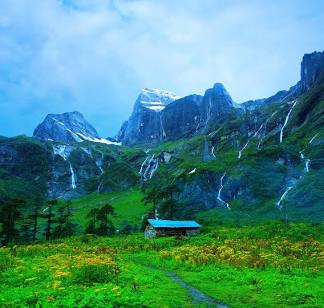
The climate of Nepal is as varied as its geography. The low-lying Terai has a sub-tropical monsoonal climate. The Himalayan foothills, where most of our treks take place, are best in the cool dry season from September to May. The traditional trekking season in Nepal is late September to December, with October and November generally recognized as having the best weather. Spring is also a popular time of year with warmer weather and the advantage of seeing spring flowers and rhododendrons in bloom. The visibility is good and days are pleasantly warm, although nights can be cold, and snow is possible above 3,000 meters.
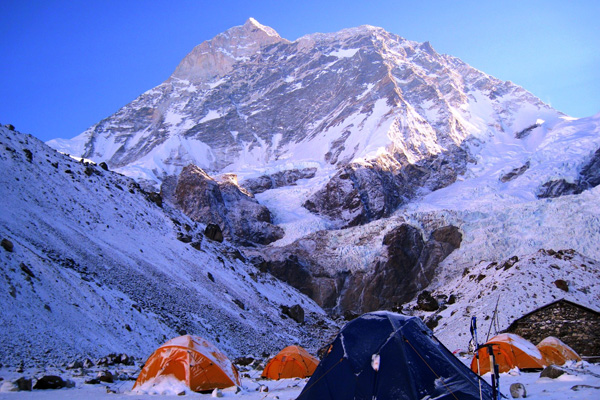
The Makalu Base Camp Trekking is likely to have a wide range of temperatures depending on the altitude and the time of day. In the mountains up to 3,500m the nights will be cool, normally around 5 degree C, and during the day temperatures sometimes rise to 25 degree C. At higher altitudes temperatures range from about 20 degree C to -15 degree C.
Group Size
We bring together a small group of likeminded people to give them a memorable and insightful travel experience with an invaluable opportunity to interact in a fun-filled environment. Our travel group generally comprises a maximum of 12 members. We need a minimum of 2 participants to run our fixed departure dates. For individualized trips, no minimum or maximum applies. If you would like to travel independently or with your friends, families and colleagues, you are invited to choose any of the trips at your convenient time frame for any number of people.
Responsible Travel
The beautiful environment of the Himalaya is also an extremely fragile one. At Himalaya Message Adventure, we are extremely conscious about the environment and aim to minimize the detrimental impact as much as possible. As deforestation is one of the greatest environmental threats, we do not have campfires and we use kerosene as cooking fuel. We also discourage trekkers from using wood-fuelled hot showers in lodges along the way. Many lodges, however, now provide solar energy, a far more eco-friendly alternative.
Garbage disposal is another major problem. Some of the busier trails are at times strewn with litter and garbage thrown by irresponsible trekking groups. Our staff members are well motivated towards eco-friendly practices. We carry the non-biodegradable garbage, apart from that which can be safely and easily burned at the campsite. Our aim is to help protect and preserve this beautiful environment for future generations of trekkers to enjoy

 Have Questions?