Lower Dolpo Trek

  • Duration 18
  • Destination Nepal
  • Trip Grade little difficult
  • Starts at Kathmandu airport
  • Ends at Kathmandu airport
  • Meals @3star hotels
  • Accommodation simple, rustic
  • Max. Altitude 3,950 meters (12,960 feet).
  • Activity High-Altitude Trekking and Pass Crossing
  • Group Type
  • Group Size 2+
  • Best Season Autumn (September to November) — The Peak Season
Highlights

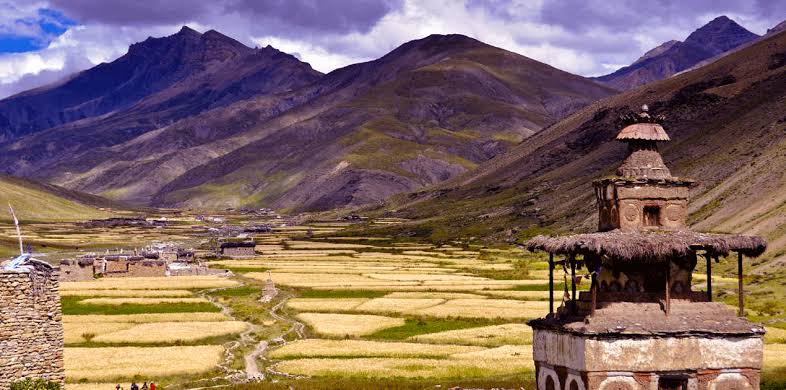
Trekking through Lower Dolpo offers an incredible mix of natural wonders and ancient cultures hidden away in Nepal’s largest national park. The absolute crown jewel is Phoksundo Lake, an alpine body of water famous for its surreal turquoise-blue color and extreme clarity, which feeds into the spectacular, 167-meter-high Suligad Waterfall. Beyond the water landscapes, the region serves as a living museum for the pre-Buddhist Bon religion and Tibetan Buddhism, where travelers can visit centuries-old monasteries and watch locals spinning prayer wheels counter-clockwise. Deep in the trek lies the magnificent Do Tarap Valley, one of the highest permanent human settlements on earth, where traditional stone villages stand out beautifully against a wide valley of terraced fields and rugged peaks. To top it off, this pristine, isolated landscape is a vital sanctuary for rare Himalayan wildlife, offering a quiet habitat for herds of Blue Sheep and the elusive snow leopard.

Lower Dolpo Trek Overview

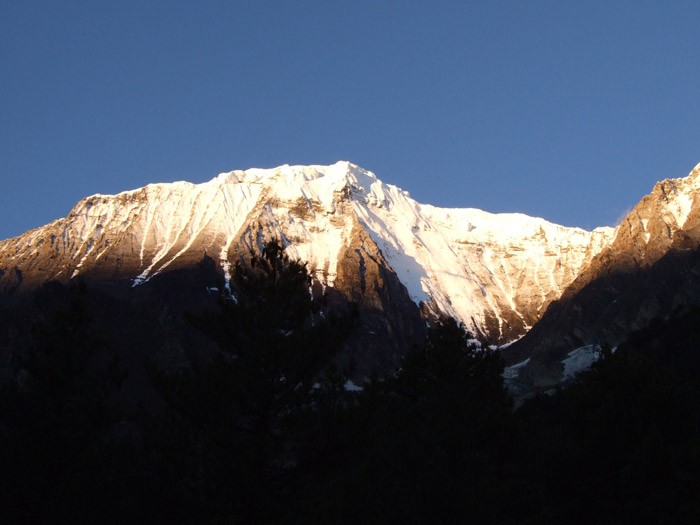
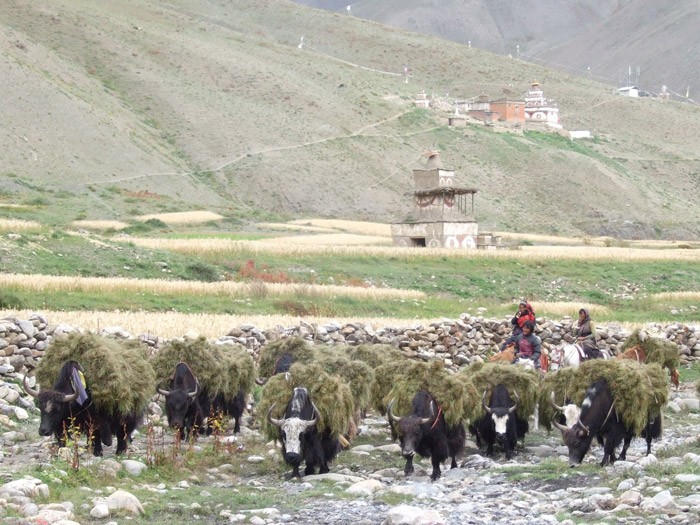
Tucked away in the rain-shadow zone of western Nepal, Lower Dolpo is a mesmerizing, rugged landscape where time seems to slow down. Guarded by the dramatic peaks of the Dhaulagiri range, this restricted region features a striking starkness—vast, arid valleys and windswept hillsides juxtaposed against dense pine forests and deep gorges. Life here revolves around centuries-old Tibetan Buddhist and pre-Buddhist Bon traditions, preserved in remote, stone-walled villages like Do Tarap and ancient monasteries. The crown jewel of Lower Dolpo is the breathtaking, deep-blue Phoksundo Lake, which sits brilliantly inside Shey Phoksundo National Park. Because it requires a special trekking permit and remains largely untouched by modern infrastructure, Lower Dolpo offers a rare glimpse into a pristine, high-altitude world where traditional salt-trade routes, yak caravans, and raw Himalayan beauty remain completely intact.

Day to Day Itinerary
Expand all

Please, look for our  company play card. Transfer to hotel, introduce your trekking guide and check the necessities. Afternoon stroll Tourist colourful market Thamel down town.

After breakfast, proceed for sightseeing tours to world heritage sites of Pashupatinath Temple-the holiest Hindu Temple on the bank of sacred Bagmati River, Bodhanath Stupa-the biggest Buddhist Stupa architecture in the world!  Patan Durbar Square is the oldest city in the Kathmandu valley with age old tradition also called Lalitpur-the city of fine arts. The visit covers the Durbar Square, the Krishna temple, the Kumbheswore temple, the Golden temple and many more. Swayambhunath Stupa-the 2000 years old legendary stupa on the hillock also nick-named as monkey temple. Your day tour ends Kathmandu Durbar Square Showcasing living goddess Kumari Temple, Nautale Durbar, the Kaal Bhairav, the Swet Bhairav, the freak Street and more.

We take an hour’s flight from Kathmandu to Nepalgunj in Western Nepal. Nepalgunj which is a border town near Nepal-India border is the gateway to Simikot of Humla. The town itself is an interesting Terai business hub of Nepal with influences from both the Nepal hills and plains as well as local Hindu & Muslim cultures. Some sightseeing places in Nepalgunj include Mini Zoo, Muslim bazaar, or if possible and interested take a walk into nearby villages. We have to also make preparation for tomorrow’s flight to Juphal.

After an early breakfast, we take a morning flight to Juphal. A 45 minutes flight over the high mountains brings you at Juphal over the Himalayan foothills, with the views of Annapurna and Dhaulagiri peaks to the north. On arriving at Juphal our trekking staffs receive you. Our first day adventure begins through the terraced fields to the Bheri River and the narrow gorge taking 2-3 hours to camp at Dunai. Dunai is the administrative headquarter of the Dolpo region. Explore Dunai in the evening.

After breakfast, our trek continues along the south bank of the river heading upstream on a good trail, deep gorges, hanging bridges and isolated villages. A tremendous gorge with pine trees and an ingenious path built about 7 meter above the river. The colorful terraced field of Tarakot greets us eventually. Tarakot is an old fortress town built by the local people as Dzong or fort. The village stands on a hillock to the south of Bheri River at one time supervised collection of tolls for the trading caravans.

We resume our walk following the Tarap chu river upstream, crossing a suspension bridge to open lunch spot.The famed Sandul Gompa lies farther east from Tarakot and at the junction of Barbung khola and Tarup chu Rriver. The path leads through the farm terraces and rural villages.  After a few ups and downs, finally encounter river bed to reach our overnight camp at Laini.

After breakfast, we continue walking up to the gorge of the Tarap River, rising high above on a trail built out from steep slopes. The walk is quite exciting as the valley becomes narrow gorge that in some places you can jump from one side to another. Descend to Chyugur Khola. Sometimes the path vanishes for a while, making our own path across stone slabs fitted on logs in between the walls which act as a bridge.

Our morning walk begins after breakfast with a gradual up leading us at Kamattarka at the confluence of the Tarap Chu and Lang Khola, a stream flowing from the east. After few hours of nice morning walk leaving the narrow gorge, from here the path leads just above tree lines for juniper bush and wild rose, typical of dry inner Himalayan valleys. Another 3 hours or more walk brings us to the village of Dho Tarap surrounded by an irregular stone wall. In this Valley both Bön Po and Chaiba sects reside together. Tarap is also inhabited by a few Tibetans and mostly Magars who have lived here for many generations.

We spend a rest day in Do Tarap for gradually getting used to the altitude. Explore villages, monasteries and enjoy the surrounding breathtaking views.  Make friends with the locals who have hardly seen westerners. The Dolpo people wear home spun clothing that is sometimes dyed maroon and they favour Tibetan style somba or dhocha (boots with upturned toes) for foot wear. Both men and women often wear religious amulets and strings of coral, amber and turquoise. The people of the region are both Bön po and Nyingmapa of Buddhist sect. The Buddhist Gompa is nearby to the camp while the Bön Gompa (pre Buddhist) is about half an hour’s walk.

After a wonderful time at Do Tarap, our journey continues towards upper Tarap valley, the walk follows in this plain valley with patched of lush verdant grass on both sides of the river, which is completely different from other parts of inner Dolpo. The trek on this pleasant track leads by the Tarap Chu upstream all the way. Tarap is certainly a dream valley with vast plains in high mountains.  A few hours’ good walk takes us to the village of Tokyu, it has a monastery belonging to the Chiba sect. After visit this village our walk continues further up this valley climbing up the rough track for almost another three hours to reach our overnight camp beneath the Numa-la.

This is one of the long and difficult days during the trek. After breakfast our journey continues to crossing of Numa La pass at 5,190m, the track leads to steep climb all the way to the top ridge of Numa la with great views of the surrounding landscapes. An incredible panoramic view of the barren mountains of Dolpo up to the Dhaulagiri (8167m).  After getting to the top of Numa La we will descend to camp at Pelung Tang

After breakfast, our morning trek starts with a steep climb to reach the ridge top of Baga-la at 5,070m, which offers fantastic views of the surrounding landscapes and of the distant snow capped peaks of Kanjirowa Himal range, after a glorious moment at the pass, almost three hours of downhill walk takes to the Dajok Tang for overnight.

Our morning trek starts through the pine forest, on leaving the forest behind the country and the vegetation changes for pasture field and alpine shrubs most of the way to Ringmo on the gradual slopes with few ups and downs as we reach our final destination at Ringmo.

A rest and exploration day. And of course we sit right on the shore of the spectacular Phoksundo Lake: remember the harrowing scene in ‘Himalaya’ when Thinley’s yak caravan attempted the ‘Devil’s Trail’. Yak caravans will be heading in and out of Ringmo on their way north towards the border of Tibet, and our most northerly destinations, Saldang and Thinje. This is the pleasant day free from the hassle of packing and chance to visit the nearby Tibetan Buddhist monastery is well worth a visit, as is the village of Ringmo. A walk part way round the lake is also very enjoyable and relaxing. This is a great day exploring the lake areas and the crystal serene Lake of Phoksundo with a great views.

Today’s trek leads downhill to Chepka. From Chepka the trail follows the massive overhanging rock. We find many important medicinal mineral which is believed to cure almost anything in this area. The route then passes through the villages, before climbing to Shyangta.

Following the trail gently sloping upwards, we march towards Juphal via Sulighat. We meet tall birch trees on our way. From atop the ridge, we can have the most spectacular views of the mountain and Juphal below. Utmost caution is required while trekking along this trail. After reaching Juphal, we can spend our afternoon exploring the busy market town or simply pursuing whatever we feel like.

We take a flight from Juphal to Nepalgunj. On reaching Nepalgunj, we return to Kathmandu on the next available flight. Upon arrival in Kathmandu, you will be transferred to your hotel. There is nothing to do but trade emails with travel companions and organize the photos. You can spend the evening leisurely, perhaps catch up on some last minute shopping and celebrate dinner together with Himalayan Glacier Trekking staffs.

Transfer to international airport and fly to onward destination.

Cost Includes
  • All airport/Hotel transfers
  • Tourist standard Hotel in Kathmandu for 2 nights with breakfast
  • All necessary paper work and permits (Lower Dolpa Restricted Area Permit )
  • Flight Kathmandu/Nepalgunj-Juphal-Nepalgunj-Kathmandu
  • 2 star Hotel in Nepalgunj
  • Full meals (Breakfast, Lunch & Dinner) during the trek
  • Hot drinks (Tea & Coffee)
  • All mountain accommodation in tent
  • An experienced English-speaking Govt. registered trekking guide, Trekking cook, kitchen boy, assistant guide and Sherpa porters to carry luggage (1 trekkers: 3 porters)
  • Guide and support staff salary, insurance, equipment, flight, food and lodging
  • A comprehensive medical kit
  • All government and local taxes
  • Trekking equipment such as down filled sleeping bag, down jacket, walking poles and duffel bag
Cost Excludes
  • Meals in Kathmandu
  • City entrance fees
  • Personal expenses
  • Travel Insurance and evacuation
  • Tipping
Departure Dates
Useful Info

Meals

Eating is a big part of Holiday. Travelling with Himalaya Message Adventure, you experience the vast array of wonderful food Nepalese, Chinese, Continental, Italian and several local cuisines. Breakfast, Lunch & Dinner are included in the package. Your guide will suggest delicious, hygienic and each place special food during your trip. Mountain restaurant owner prefer not to order many dishes and waste food as they would like to cater more trekkers with limited food before run off stuck. Its a week or more days hard work to porters and caravans to bring food to these places. During this trek you will usually have breakfast and dinner at the same Lodge, lunch will be eaten at one of the trail side restaurants en-route.

Drinking water:

Himalaya Message Adventure provides unlimited chlorine/Iodine treated water during the trek. All tea houses have mineral water and boiled water for trekkers upon additional cost. We discourage the purchase of Mineral water and bottled water while on the Trek as plastic bottles aredifficult to dispose off and have become an environmental problem

What to take

This is a very active trip, meaning you will be on the move most of the time, so pack as lightly as possible. We provide one porter for every two travellers; your trekking gear will be carried by the porter in a duffel bag that we will provide. The maximum the porters are allowed to carry 15 kgs per trekker means 30 kgs from 2 trekkers . Unnecessary luggage can left in Kathmandu Hotel and its absolutely free of cost. .

Important to note:

Please read the Checklist section of this trip notes for additional details of what you need to bring for the trek on this trip. You will need to bring a comfortable medium sized day pack to carry the things that you will need during the day. This should have a waist strap or (better) a padded waist belt. The weather is subject to change in high altitude so layered clothing is recommended throughout the year.

FAQs
  • The absolute best windows are Autumn (September to November) and Spring (April to May).

  • Getting to the starting point is an adventure in itself and usually requires two domestic flights

  • It is a strenuous trek. You will be walking 5 to 7 hours a day over rugged, rocky terrains, steep cliff-side trails, and loose gravel. The real test is enduring consecutive days at high altitudes and successfully crossing two massive passes: Numala Pass (5,310 meters) and Bagala Pass (5,170 meters). Prior physical training focusing on cardio and leg endurance is highly recommended.

You May Also LikeSimilar Itineraries
Upper Dolpo Trekking – 24 days
Difficulty: Challanging 24 Days
Max. Height: 5,375 m

US $6,500USD

Lower Dolpo Trek
Lower Dolpo Trek
Difficulty: little difficult 18 Days
Max. Height: 3,950 meters (12,960 feet).

US $USD 2,000