Mt. Saribung Expedition (6,346m) exit via Mustang – 30 days

  • Duration 30
  • Destination Nepal
  • Trip Grade Very Difficult
  • Starts at Kathmandu
  • Ends at Kathmandu
  • Meals Breakfast/Lunch/dinner
  • Accommodation The Teahouse Sections & The Camping Section (The High-Altitude Wilderness)
  • Max. Altitude 6,346 m
  • Activity Mountain climbing
  • Group Type Mountainears
  • Group Size 1-12
  • Best Season Autumn (September to November)
Highlights
  • Expert & experienced cook and crews
  • Excellent and comfortable camping logistics
  • Medical back up with Oxygen mask set throughout the trip
  • Trek & Climb in the area without crowd.
  • Trek on to the land of hidden kingdom “Upper Mustang”
  • Trek via the world famous trekking route “Annapurna Circuit”
  • Trek into the mystical and peaceful area (Upper mustang and Narphu), where the pure Tibetan cultures and tradition still exist.
  • Climb the non-technically challenging peak, Mt.Saribung (6,328m) with professional and Everest climbed Sherpa Guides

Mt. Saribung Expedition (6,346m) exit via Mustang – 30 days Overview

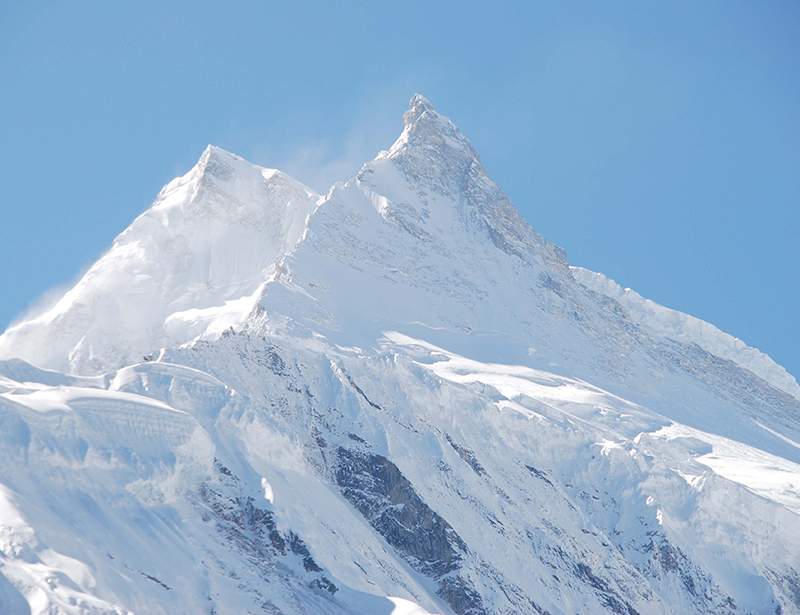
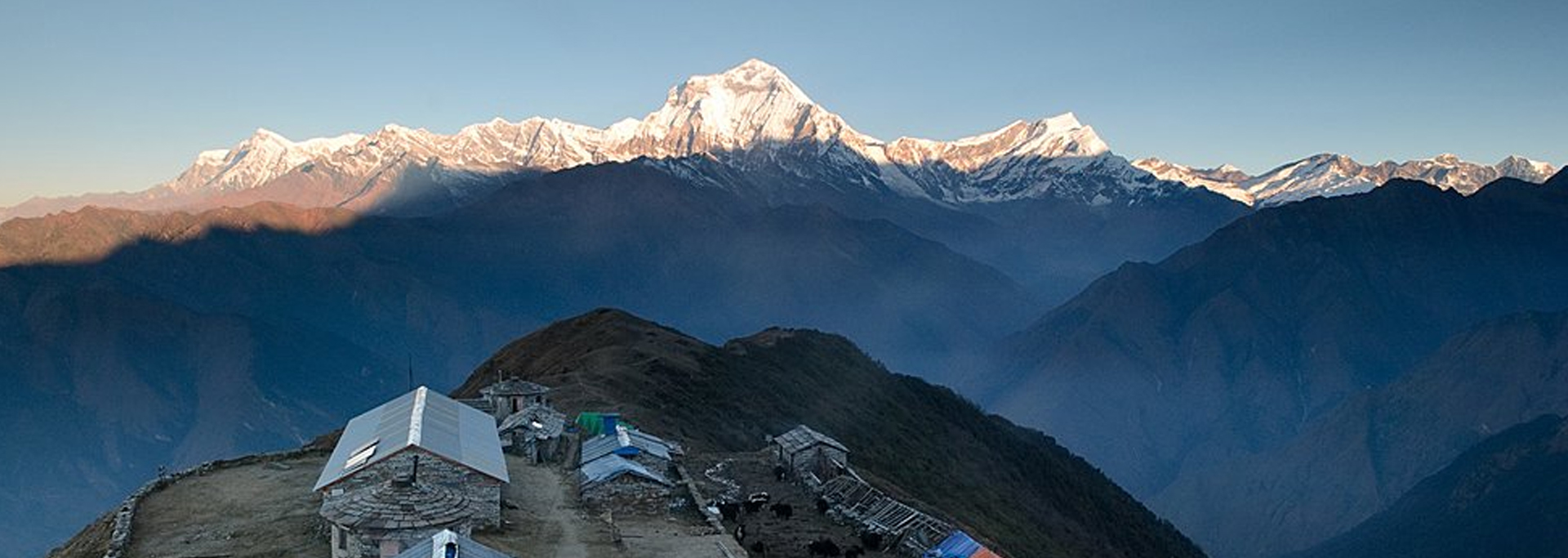
The Mt. Saribung Expedition 6,346m exiting via Upper Mustang is a phenomenal, off-the-beaten-path mountaineering journey that links the rugged Nar Phu Valley with the semi-arid, Tibetan-influenced landscapes of Mustang. Typically approached in a counter-clockwise loop, the expedition kicks off from the lush Marsyangdi River valley at Koto, branching off the classic Annapurna Circuit to climb through the dramatic, deep canyons of the hidden Nar Phu region. After proper acclimatization in the timeless stone village of Phu 4,080 m, you push higher into the wild Damodar Himal range, establishing a Base Camp and an Advance Base Camp on the glaciated terrain. The dual challenge of the expedition climaxes with a technical push across the high-altitude ice of the Saribung La Pass 6,020 m and a final ridge-climb to the snow-domed summit of Mt. Saribung, rewarding you with an unmatched panoramic vista of the Dhaulagiri, Annapurna, and Manaslu ranges.

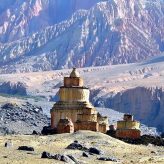
Once the summit is achieved, the distinct “exit via Mustang” begins as you drop down the western slopes into the vast, wind-swept, ochre-colored high desert. This leg of the trek guides you past the sacred, high-altitude lakes of Damodar Kunda and down through remote cave-dwelling settlements like Yara before arriving at Lo Manthang  3,810 m , the ancient, mud-walled capital of the former Kingdom of Lo. Spending time exploring its centuries-old monasteries and royal palace offers an incredible cultural transition from pure wilderness to vibrant Tibetan Buddhist heritage. The final descent follows the historic trade trails down through the dramatic canyons of Charang and Ghiling, eventually meeting the Kali Gandaki River bed to conclude this epic trans-Himalayan traverse at the windy airstrip of Jomsom.

Day to Day Itinerary
Expand all

After you arrive at Tribhuvan International Airport in Kathmandu, you will have to go through custom formalities. You will be greeted by our representative who will be anxiously waiting for you with a placard displaying your name in his hand. You will be transferred to the 3-Star category hotel in a private vehicle. Once you get refreshed, you will get briefing regarding the itinerary. Enjoy welcome dinner in the evening where you can taste authentic Nepali dinner. Stay overnight in a hotel.

You will be transferred to our office for documentation work. You will also be introduced with your crew members and other trekkers who are going to join you on the trip. In the afternoon, half day sightseeing tour will be organized during which you will be taken on memorable UNESCO Heritage Tour. Tour begins with visit to Nepal’s holiest Pashupatinath Temple Complex and takes us through Nepal’s largest Bouddhanath Stupa and 2500 years old Swoyambhunath Stupa. We will return to hotel for overnight stay.

Leaving Kathmandu early in the morning, we will follow Prithvi Highway till we reach Dumre. We will take a branched path from Dumre to Besisahar which is the district headquarter of Lamjung. Our journey is exciting with scenic views of green hills, river and forest at the backdrop. Hotels and lodges are found in abundance in Besisahar. Stay overnight at Besisahar.

From Besi Sahar, we will take a jeep drive to Koto passing through quite a lot beautiful local villages. Instead of walk, we take jeep drive to save few days on the lower altitude; the drive goes through along the main trekking trail. It takes about 7-8 hours to reach Koto. The road isn’t blacktopped pitch road; its muddy road. The road follows the famous Marsyangdi River.

We will cross river that continues to Nar Phu valley and walk to the forest located above Phu River. The trail continues further along cave to Dharmasala. Walking along canyon, we will reach pasture land and continue walking to the temporary settlement of MethangPati. Stay overnight at MethangPati.

Leaving MethangPati, we will pass through temporary winter settlement of Nar where we can see yak grazing lazily on Himalayan herbs. Walk through the low shrubs and bushes with scenic mountain views at the backdrop to Junam which is the semi-permanent settlement. Enjoy the views of glaciers as we head towards semi-permanent settlement of Chako. Taking series of ups and downs from Chako, we will reach Kyang where we will stay overnight.

We will follow the descending trail to river. Following the river, we will walk through settlements where we can see colourful chortens. The trail continues along glacial stream, Canyonlands and gorges and arrive at Phu gate. This ancient gate is known as PupigyalKwe. Enjoy the views of three villages of Phu from this ancient gate. Enter PhuGaon for overnight stay.

This is a rest day. We will visit local villages to meet with locals. Dzong and remains of two forts are also place of interest in Phugaon. Time permitting, we will visit Tashi Lhakhang Gompa to meet with Lama Karma SonamRimpoche. Stay overnight at PhuGaon.

As today’s walk is also quite long day walk, so we eat early morning breakfast and start our long day walk to Yak Kharka (4,615m). We follow the trek route towards to Damodar Kund to Bhrikuti base camp along with Layju Khola (river) and crossing the Nagoru. On today’s walk we won’t get any teahouse in between so possibly having pack lunch, we keep walking until we reach to Yak Kharka for our over night camp.

We will cross the glacier and follow the escalating trail to Bhrikuti Base Camp. The trail continues through lateral moraine and rubble strewn glacier. Later, we will arrive at point where there is no distinct path. We will set our camp under the shadow of southern face of BhrikutiMountain. The camp site will be located close to the frozen lake. We can enjoy the close-up view of Saribung Mountain from our camp. Stay overnight at Bhrikuti Base Camp.

This is the preparation day. Our Sherpa crew will explore the glacier for a location for our high camp while the guide will share Saribung climbing strategy with team. He will also provide you with necessary instructions and teach you what to do and how should you call for help if in case of emergency. Sherpas will make way and fix cables wherever necessary and set up High camps while we will practice climbing glaciers. Stay overnight at Bhrikuti Base Camp.

Saribung Climbing begins on this day. We will pack our things and get ready for the challenging climb. Walking through the moraines of en route glacier, we will follow the snowy trail that allows the close-up views of KhumjunggarPeak (6,959m) and DamodarMountain. We will arrive at our Interim Camp that is located on moraine at an altitude of 5400m where we will stay overnight.

We will continue our journey along the moraines and glacier till we reach the point where the glacier separates two valleys. The valley to the right side head towards the Kunlun Pass (6035m). We will choose the left trail toBharchauk Cwm. The path is scenic where we will be surrounded by snow covered mountains. We will set our camp on ice. SaribungMountain will be towering above us. Stay overnight at Advance Base Camp.

We will reach to the summit of Saribung on this day. We will start much early before sunrise. Although the trail is not much slope, we may need to use rope to climb to the summit through crevassed route. The summit allows incredible views of Tibet to the north. We will descend from summit and cross to another side from where we will head towards Japanese Base Camp. Stay overnight at Japanese Base Camp.

Including a spare day in our itinerary makes sure that our trip goes according to plan even if we get delayed by unforeseen circumstances like bad weather and other factors.

It is named Japanese Base Camp because there is a chorten which is built by Japanese expeditioners. We will follow the river bed for couple of hours and walk through kharkas to DamodarKunda where we will stay overnight.

DamodarKundaor Damodar Lake is the holy pilgrimage sitewhere many Hindus visit each year. There is an ancient Buddhist chorten on ridge which marks the holiness of this site. Explore the surrounding areas and stay overnight at DamodarKunda.

Leaving scenic DamodarKunda area, we will move higher throughpasture land to Barsyo River. We will set our camp nearby Barsyo River. Stay overnight at BarsyoKhola Camp.

After an early morning tea, we will walk along Barsyo River. The trail criss-crosses forest and takes us through narrow stone path where we can see yaks carrying load. We will pass through tiny settlements to Yara where we will stay overnight.

This is rest day. Yara is considered as entry point for Lomanthang. Explore around Yara and stay overnight.


Leaving Yara, we will lower down to river. Walking along river, we will arrive at metal bridge. We will cross this bridge and reach Dhie village. Climbing uphill from Dhie, we will reach Lomanthang where we will stay overnight.

This is an acclimatization day. We will explore around Lomanthang which is the ultimate destination of Upper Mustang Trek. Lo Manthang is the capital City of Mustang. There are several interesting places around Lomanthang that we can visit on this day. Tingkhar is one of such attractions. Tingkhar is the last village of Mustang. Similarly, monasteries like NamgyalGompa, ThugchenGompa and ChyodiGompa are other attractions. We can also visit ancient Lo Manthang Palace which is the residence of local king. Stay overnight in Lo Manthang.

Lomanthang is a fortified city where we can visit Royal Palace and monasteries. We will follow the scenic path from Lomanthang which allows spectacular views of Nilgiri, Annapurna, Bhrikuti, Tilicho and other peaks and mountains. We will follow Chalang River for brief period before arriving at Charang where we will stay overnight.

Charang is an amazing settlement which is crowded with chortens and gompas. Charangholds the largest library in Lo. We will walk past trees and fields and climb Choya La Pass to reach Dhakmar. Crossing Ghami River, we will reach Ghami where we will stay overnight.

From Ghami, we will head towards Gheling and continue climbing to Chyangmochen. Crossing Yamdo La Pass, we will head towards Gheling. Walking past chortens decorated in red and yellow, we will reach Samar village. Crossing Chele La Pass from Samar, we will arrive at Chele where we will stay overnight.

Leaving Chele, we will lower down to Kali Gandaki River and walk through gorges till we reach Chhusang village. From Chhusang, we will walk past tiny Tangbe village and walk through beautiful valley toKagbeni. We can get scenic view of Nilgiri Peak. We will walk through wheat field and apple orchards to Kagbeni where we will stay overnight.


Muktinath, the Lord of Salvation is a holy site that is hold sacred by Hindus and Buddhists. From Kagbeni, we will trek all the way up to Muktinath where we will visit Muktinath Temple and Jwalamai temple, the temple of eternal flame. We will return from Muktinath to Jomsom where we will stay overnight.

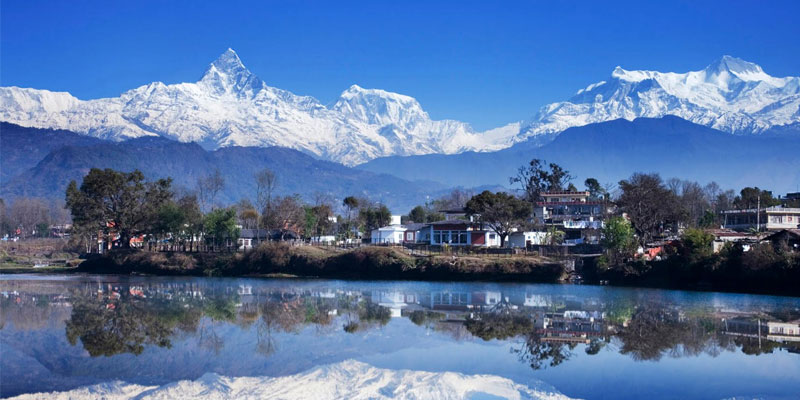
20minutes of scenic flight fromJomsomwill take us to Pokhara. Take rest. You can explore around Pokhara. Seti Gorge, David Fall, Mahendra Cave, Gupteswor Cave and Mountaineering Museum are some of the places of interest in Pokhara. Visiting Phewa Lake in the evening is a fine idea. Stay overnight in Lakeside hotel.

We will drive to Pokhara Airport in the afternoon. Scenic flight from Pokhara will take us to Kathmandu. Take rest. Write a journal and arrange your photo albums. You can visit the ultimate shopping destination for tourists, Thamel in the evening to buy gift items. Stay overnight at hotel.

We will transfer you to the Airport as per your scheduled flight for your onward destination. Safe journey. We hope to see you soon.

Cost Includes
  • Climbing Royalty fee and all govt. taxes for Mt. Saribung
  • Special trekking permit fee for upper mustang and Nar &Phu
  • 4 nights, 3 star hotel accommodation on twin sharing room BB basis
  • Jomsom – Pokhara – KTM, domestic airfares and airport taxes
  • KTM to Syange by private transport (Bus and Jeeps)
  • Expedition Sherpa Guide
  • Climbing support Sherpas on 1:3 ratios
  • Cook (s) and necessary kitchen staffs
  • Require number of porters and yaks to & from Base Camp (BC)
  • All necessary Climbing hardware gears including fixed ropes
  • All necessary camping and kitchen gears
  • Meals (B/L/D), during trekking and climbing period
  • High altitude food for higher camps
  • Best quality single or twin shared tent with sleeping mattress at Base Camp
  • High altitude tents as require
  • Oxygen with regulator set for medical purpose at BC
  • A group medical kit
  • Walkie-talkie sets
  • Satellite phone for emergency call purpose (personal calls on payable basis)
  • High camps stoves and gases (EPI gas with burners)
  • Insurance of climbing Sherpa and local team members
  • All airport/hotel transfers by private vehicles
  • Celebration dinner
Cost Excludes
  • Medical/Personal high risk travel insurance
  • Personal climbing gears
  • Major meals in Kathmandu
  • Cost of personal nature expenses
  • Cost of electronic appliances
  • International air ticket and departure tax
  • Tip to the local staff
  • Cost occurred due to delay and cancellation of flights, extension of trek and climbing period etc.
Departure Dates
Useful Info

Our 6,000m expedition peaks are more challenging than trekking peak climbing trips. Your tough level of fitness is really important for this trip; therefore we strongly suggest preparing yourself in good physical fitness level. You do not need to be an athlete, but a good level of overall fitness is important. Being fit will certainly improve your chances of reaching your chosen summit. As an indication, you should be able to walk 8 km / 5 miles with a maximum height gain of 800m/2,000ft with a 10kg rucksack in 5 hours or less.
In order to get ready for this challenge, you need to be trained at least for about 5 to 7 months to prepare yourself as strong candidate. You can go to fitness center every morning for about 2 hours, do hiking every weekend with increasing weights on your pack (i.e. 7kg, 10kg, 13 kg, 16kg and up to 20kg), manage some time for cycling for couple of hours for 3 or 4 times a week. However during climbing, there might be little symptoms of an altitude illness like mild headache, fatigue etc. but take it as normal and just drink a lot of water (4 – 5 liters) every day. On this trek, youneed to be able to hike 6 – 10 hours over hilly terrain up to 6,000m of altitude with daypack.  On the summit push, extra effort is required walking on ice and climbing up to 10 – 12 hours. We will have porters to carry our heavy camping equipment, food and also the climbing gears.

Experience Required

All of our 6000m expedition trips are accessible to experienced trekkers and those who have done some climbing trips in European mountains in order to take another challenge on the Himalaya’s Mountains. This trip will be helpful if you want to gain some knowledge about the mountaineering and have future plan to climb BIG Mountains.

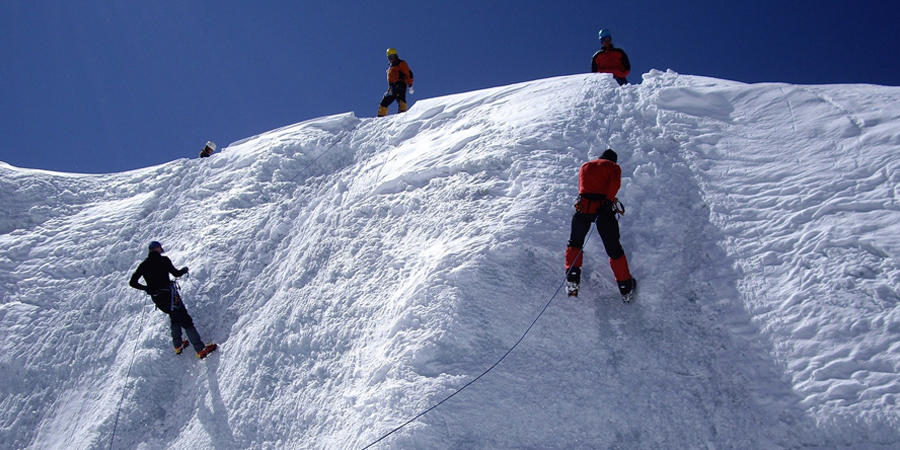
If you have any previous mountaineering experiences and well knowledge about how to play with mountaineering gears, good with rock climbing and ice climbing, will surely increase the chances of reaching thesummit andalso previous trekking and mountaineering experiences is mandatory but doesn’t require any technical experience. But if you are participating on one the technical climbing peak then you must have well knowledge about how to use the mountaineering climbing gears (i.e. crampon with boot, Ice axe, harness, ropes, jumars, prussiks, abseiling, moving past knots, anchor etc.).Crampons are use for maximum grip and harness and ropes are use for maximum safety during climbing. But for those who have no mountaineering experience and skill but have gottough level of fitness, , you will be have basic training session by our guides about how to use the climbing gears during rest/acclimatization day. So we always make it sure regarding the safety of the team and successful climb of the peak.

FAQs
  • Yes, prior high-altitude trekking is mandatory, but advanced technical mountaineering is not. You should have already crossed a high Himalayan pass (like Thorong La or Cho La) or reached an altitude of at least 5,000 m. While Mt. Saribung is physically grueling, it is technically straightforward—a glaciated snow dome. If you know how to walk in crampons and use an ice axe, our climbing Sherpas will handle the complex rope setups and guide you safely across the glacier

  • Our guides carry satellite phones, comprehensive medical kits, and supplemental oxygen tanks. Throughout the trek, we monitor your oxygen saturation levels daily. If you show symptoms of acute mountain sickness between Phu and Mustang, a dedicated assistant guide and porter will immediately descend with you to a lower altitude. If it is a severe medical emergency, we will coordinate an emergency helicopter evacuation to Kathmandu through your travel insurance.

    • Water: Our camp kitchen crew collects clean glacial meltwater, boils it thoroughly, and provides it to you hot or cooled every morning and evening.

    • Electricity: Once we leave Phu village, there are no charging sockets. You must bring a high-capacity power bank (20,000mAh to 30,000mAh) or a portable solar panel attached to your daypack to keep your camera and phone charged during the 6 days of wilderness camping.

  • Because this unique route cuts directly through two strictly regulated restricted areas: the Nar Phu Valley and Upper Mustang. The Government of Nepal charges premium environmental and cultural fees for these pristine zones to limit mass tourism. Your expedition package entirely covers these costs, including your Nar Phu Special Permit, Upper Mustang Restricted Area Permit ($500 per person alone), ACAP permit, and your official Saribung climbing permit.

You May Also LikeSimilar Itineraries
Mananslu Base Camp Trek – 17 days Featured
Mananslu Base Camp Trek – 17 days
Difficulty: Challanging 17 Days
Max. Height: 8,163 m

US $2,800USD

Upper Dolpo Trekking – 24 days
Difficulty: Challanging 24 Days
Max. Height: 5,375 m

US $6,500USD

Australin Camp Dhampus Trekking – 4Days
Difficulty: Moderate 4 Days
Max. Height: 2,100 meters

US $380USD

Khopra Trekking – 13Days
Difficulty: Moderate 13 Days
Max. Height: 3,660 m

US $900USD

Everest Three Passes Trekking – 23 Days
Difficulty: Hard 23 Days
Max. Height: 5,643 m

US $2,400DSD

Gokyo Lake-Cho La Pass-Everest Base Camp Trek – 18 days
Difficulty: Hard 18 Days
Max. Height: 5,545 m

US $2,000USD