Bhutan The Last Shangri-La Tour – 7 Days

  • Duration 7
  • Destination Nepal
  • Trip Grade
  • Starts at Paro international airport
  • Ends at Paro international airport
  • Meals Breakfast/Lunch/dinner
  • Accommodation 3star hotel
  • Max. Altitude 2,320 m
  • Activity Trekking
  • Group Type Who loves the nature
  • Group Size 1-12
  • Best Season Autumn (September to November)
Highlights

The ultimate highlights of a Bhutan tour lie in its striking blend of fortress architecture, dramatic landscapes, and sacred spiritual sites. The undisputed crowning jewel of any itinerary is the exhilarating hike to Paro Taktsang (Tiger’s Nest Monastery), a sacred 17th-century temple complex that clings miraculously to a sheer granite cliff 900 meters above the valley floor. Equally mesmerizing is the Punakha Dzong, widely praised as the most beautiful fortress in the kingdom, which stands majestically at the confluence of two rushing rivers and is approached by a traditional wooden cantilever bridge. Travelers are also treated to unforgettable natural scenery while crossing the Dochula Pass at 3,100 meters, where 108 memorial stupas sit framed against a panoramic backdrop of the snow-capped Eastern Himalayas. The journey is further enriched by exploring the massive Buddha Dordenma statue that towers over the Thimphu valley, observing vibrant Tshechu (masked dance) festivals in ancient courtyards, and unwinding at the end of the day with a traditional Bhutanese hot stone bath at a rustic local farmhouse.

Bhutan The Last Shangri-La Tour – 7 Days Overview

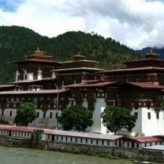
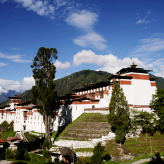
Bhutan The Last Shangri-La Tour is our effort to introduce you to the rich cultural heritage of this tiny Himalayan kingdom also known as the last Shangri-La. Our week-long tour in Bhutan begins with sightseeing in the country’s capital, Thimphu, where we visit the Memorial Chhorten, mini- zoo, National Institute of Traditional Medicine, folk heritage museum and the majestic TashichhoDzong (fortress). Next, we travel to Punakha via Dochu La pass (3,100m) and tour the ChimiLhakhang temple on the way. We also visit the PunakhaDzong and explore the amazing Gangtey village before heading to Paro. In the beautiful Paro valley, we visit RinpungDzong and KichuLhakhang temple. Our tour ends with a hike to the famous Tiger’s Nest Monastery which is a perfect way to end one’s journey in the last Shangri-La.
Day to Day Itinerary
Expand all

As your flight nears Bhutan, you can enjoy amazing views of the Himalayas including the sacred Chomolhari and Jichu Drake peaks. At the airport, you will be greeted by a representative from Himalayan Glacier who will take you to your hotel in Thimphu for a good night’s sleep. However, if your flight arrives early and you want to visit a few places in Thimphu then it can be arranged too. Overnight in Thimphu.

In the morning, we visit Memorial Chorten (built in memory of the third King of Bhutan who reigned from 1952-1972), nunnery temple, mini zoo to see Takin, the national animal of Bhutan. Today, we also visit other landmarks of Thimphu including the National Institute of Traditional Medicine, Bhutanese traditional painting school, folk heritage museum, the majestic TashichhoDzong and the traditional paper factory. However, some of the landmarks are closed in the weekends (Saturdays and Sundays). Therefore, if we are in Thimphu during the weekends, we explore the Weekend Market instead. Overnight in Thimphu.

After breakfast, we drive to Punakha via Dochu La Pass (3,100m), where on a clear day we get spectacular views of the Himalayas. Next, we drive downhill through rhododendron, fir and hemlock forests.  On the way, we visit ChimiLhakhang, a fertility temple dedicated to the Divine Madman or Lama DrukpaKuenley. After reaching Punakha, we also visit PunakhaDzong which was built between 1637-1638 and is the second oldest and the second largest dzong in Bhutan. Overnight in Punakha.

In the morning, we explore Wangduephodrang. The nearby villages are known for their slate and stone carvings. We then drive through dense oak and rhododendron forests to Gangtey, a beautiful village surrounded by amazing snow-capped mountains. From here, we enjoy views of the picturesque Black Mountain ranges as well as the beautiful Phobjikha valley, the winter habitat of the black-necked cranes. Gangtey Monastery is perched atop a small hill that rises from the valley floor. We explore Phobjikha villages before driving back to Punakha for an overnight stay.

After breakfast, we begin our drive to the Paro valley. In Paro, we visit RinpungDzong which means “fortress made from a heap of jewels.”We will also visit KichuLhakhang, the oldest temple in the country and DrugyalDzong, built in 1646 to commemorate Bhutan’s victory over Tibetan invaders during the 1600s. Overnight in Paro.

After breakfast, we hike for 4 to 5 hours to Taktsang (Tiger’s Nest) Monastery, which is Bhutan’s most famous monastery situated at 3,180 meters. Guru Rinpoche (spiritual master) is said to have flown on the back of a tigress to meditate in a cave where the Taktsang Monastery now stands. Lunch will be served in the Cafeteria Restaurant, located about halfway up the mountain. After having explored the monastery, we hike down to the valley floor. Overnight in Paro.

Today we bid farewell to the tiny Himalayan Kingdom and her friendly people. Druk Air generally departs in the early morning to avoid adverse weather conditions. Therefore, after breakfast, we will be taken to the airport in the morning for final departure.

Cost Includes
  • Arrival in International Airport and Departure.
  • Hotel in Kathmandu
  • Entrance fee in National Park.
  • Climbing Peak Permit
  • Kathmandu to Lukla / Lukla to Kathmandu Flight
  • All camping Equipment, two men tents, Dining tent, Kitchen Tent and Mattresses during the Peak climbing.
  • Lodge and Camping Accommodation Breakfast, lunch, dinner in trekking and climbing period.
  • Climbing Sirdar, Sherpa, Cook, Kitchen staffs and porters.
  • Insurance for trekking & Climbing Staff.
  • Climbing equipments and Daily Salary for Staff.
  • Oxygen for Emergency Rescue.
  • Climbing Gears, Fix Rope, Main Rope, Snow Ball, Ice Crop, Rock Piton, High Tent, EPI Gas, EPI Head, Cooking Set etc.
Cost Excludes
  • Personal equipment for Climbing.
  • Personal travel Insurance.
  • Lunch & dinner in Kathmandu.
  • Emergency Rescue evacuation.
  • Personal expenses/Bar bills.
  • Tipping for Expeditions staff.
  • Alcoholic beverages and canned or bottled cold drinks.
  • Extra cost for air cargo, if more than 20 kgs.
  • Extra cost for bad weather or change flight with helicopter
Departure Dates
Useful Info

Planning a trip to Bhutan requires navigating a few essential, highly regulated steps that align with the kingdom’s “High Value, Low Volume” tourism model. First and foremost, independent backpacking is not permitted; all international travelers must book their journey through a licensed Bhutanese tour operator who will arrange a mandatory local guide, private transport, and necessary routing permits. To fund national infrastructure, free healthcare, and education, the government levies a mandatory Sustainable Development Fee (SDF) of $100 USD per person, per night for international guests (with children aged 6 to 11 receiving a 50% discount and those under 5 exempt entirely). Visas are processed entirely online by your tour operator for a one-time fee of $40 USD, requiring a color passport scan with at least six months of validity. When it comes to logistics, you will need to book connecting flights into the country’s only international airport in Paro via regional hubs like Kathmandu, New Delhi, or Bangkok through one of the two authorized local carriers, Drukair or Bhutan Airlines. Finally, remember to pack modest clothing that covers your shoulders and knees to comply with the strict dress codes enforced at all sacred temple and fortress sites.

FAQs
  • Yes, and it is strictly enforced. When entering any Dzong (fortress), temple, or religious site, your shoulders and knees must be covered. You need to wear long pants or full-length skirts, and shirts with long sleeves. T-shirts, shorts, sleeveless tops, and hats are not allowed inside these sacred spaces.

  • The hike is moderately challenging but highly rewarding. It is a steady uphill climb that takes about 2 to 3 hours to reach the top and another 1.5 to 2 hours to walk back down. The trail starts at an elevation of roughly 2,600 meters and climbs up to 3,120 meters. Most people with a basic level of fitness can complete it comfortably if they take regular breathing breaks and pace themselves

  • Bhutan is incredibly safe and boasts one of the lowest crime rates in the world. Violent crime is extremely rare. Your biggest safety concerns will simply be staying hydrated during hikes, watching your step on uneven stone paths, and being mindful of motion sickness on the winding, twisting mountain roads.