Kathmandu Heritage – 3 Days

  • Duration 3
  • Destination Nepal
  • Trip Grade V-easy
  • Starts at Kathmandu
  • Ends at Kathmandu
  • Meals
  • Accommodation
  • Max. Altitude 2,782 m
  • Activity Exploring
  • Group Type Histry & Spritual
  • Group Size 2-12
  • Best Season Autumn (September to November)
Highlights

The core highlights of Kathmandu’s heritage lie in its extraordinary blend of royalty, spirituality, and artistic mastery, seamlessly woven into a single geographic valley. Architecturally, the defining feature is the indigenous Newari craftsmanship, visible in the multi-tiered pagoda-style palaces of the Kathmandu and Patan Durbar Squares, which showcase complex, hand-carved wooden roof struts and iconic lattice windows. Spiritually, the valley is a unique global nexus where Hinduism and Buddhism don’t just coexist but actively merge, highlighted by the shared devotion at the hilltop Swayambhunath Stupa. Each monument carries distinct cultural weight—from the deeply moving evening rituals and sacred cremation ghats along the Bagmati River at Pashupatinath Temple, to the meditative, continuous clockwise kora (circumambulation) performed by pilgrims around the immense white dome of Boudhanath Stupa, the center of Tibetan Buddhism. Ultimately, these highlights are bound together by living history, where ancient stone inscriptions dating back to the 5th century stand alongside active community traditions, ensuring that these centuries-old spaces remain vital, beating centers of modern daily life.

Kathmandu Heritage – 3 Days Overview

Kathmandu’s heritage is essentially a “living museum” where ancient history and daily modern life blend seamlessly together. Rather than being confined to galleries or blocked off behind velvet ropes, the city’s historical legacy thrives in its active temples, bustling courtyards, and vibrant street festivals that have been preserved continuously since the 2nd century AD. This rich cultural landscape was shaped largely during the medieval Malla Dynasty, an era when the three rival kingdoms of Kathmandu, Patan, and Bhaktapur competed to build the most magnificent palaces and towering pagodas. This intense artistic rivalry gave rise to the iconic Newari architectural style, which is world-renowned for its intricate, hand-carved wooden windows, deep red brickwork, and masterfully sculpted metal deities.

Today, this dense concentration of history is globally recognized through seven distinct UNESCO World Heritage monument zones packed tightly within the valley. These sites are split between the grand, historic royal centers—the Durbar Squares of Kathmandu, Patan, and Bhaktapur—and highly sacred spiritual spaces, including the sprawling Hindu temple complex of Pashupatinath along the holy Bagmati River, the ancient hilltop stupa of Swayambhunath, the massive Tibetan Buddhist dome of Boudhanath, and the historic ridge-top temple of Changu Narayan. What keeps this tangible architecture standing and culturally vibrant is Kathmandu’s intangible heritage: the centuries-old Guthi system, a traditional community trust that funds temple maintenance and organizes massive chariot festivals like Indra Jatra. Ultimately, the true essence of Kathmandu’s heritage lies in this continuity, where the scent of street-side incense, ancient stone shrines, and living traditions remain an inseparable part of the community’s daily heartbeat.

Day to Day Itinerary
Expand all

Our airport representative will be receiving you at Tribhuvan International Airport, Kathmandu and s/he will be displaying an Ace the Himalaya signboard outside the airport terminal. You will be then transferred to your respective hotel in our private tourist vehicle.

Overnight at a Hotel. No meals included

The sightseeing places we visit will include:

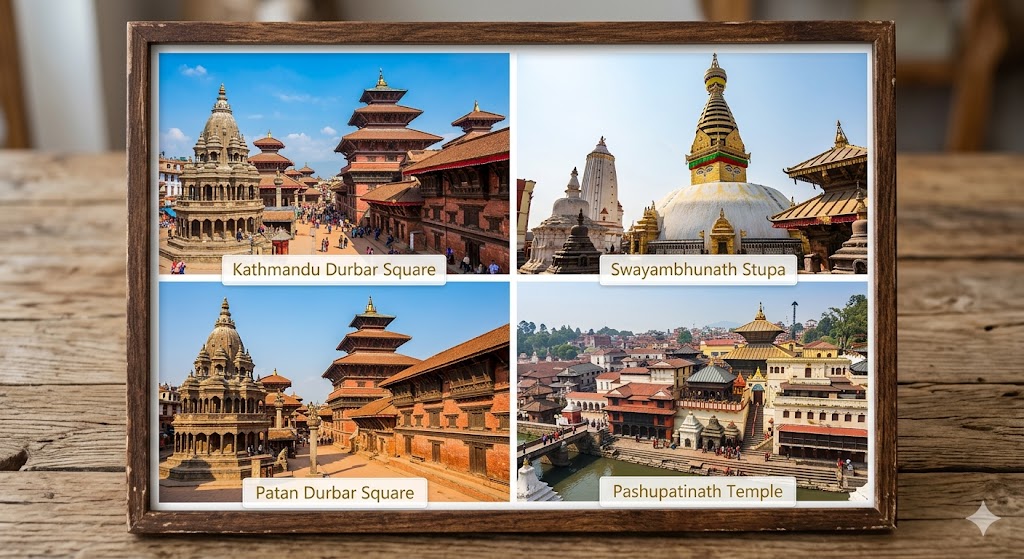
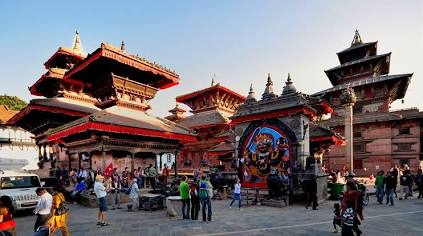
Kathmandu Durbar Square
This complex of palaces, courtyards and temples, built between the 12th and 18th centuries, used to be the seat of the ancient Malla kings of Kathmandu. An intriguing piece here is the 17th- century stone inscription set into the wall of the palace with writings in 15 languages. The Durbar Square is the social, religious and urban focal point of the city. There are also three museums inside the palace building.

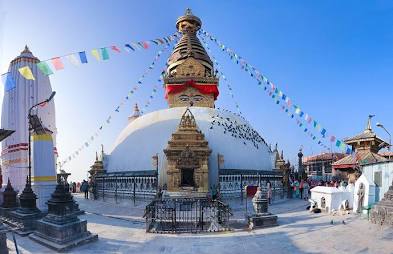
Swoyambhunath Stupa – The Monkey Temple
Watches over the valley from the top of a hillock on its western side. The huge stupa is one of the holiest Buddhist sites in Nepal and its establishment is linked to the creation of the Kathmandu Valley out of a primordial lake. Swoyambhu is also known as Samhengu and the Monkey temple because of the countless monkeys living in the premises.

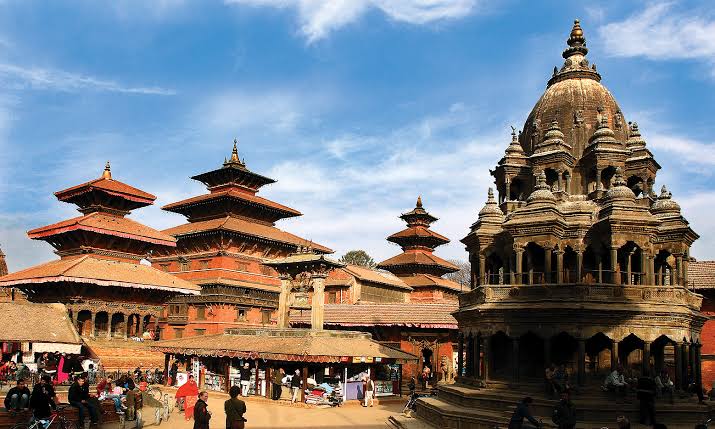
Patan City
Patan is an old Newar city where we will see the historic Durbar Square, the Golden Gate, the sky piercing temple of Taleju and the statue of Yogendra Malla, Krishna Mandir, Sati Temple, Hiranya Varna Mahabir (the golden temple), Mahabouddha with views of old carved wooden windows through  the streets, curios shop and Bazaars.

Pashupatinath Temple
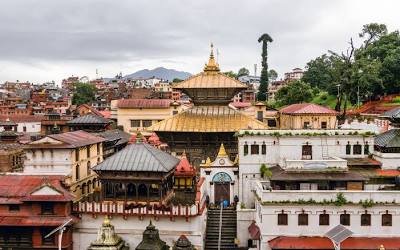
Pashupatinath is one of the most sacred Hindu shrines in the world and lies 5 kms east of the city center. The richly-ornamented pagoda houses the sacred Linga, or phallic symbol, of Lord Shiva. Chronicles indicate the temple’s existence prior to 400 AD. Devotees can be seen taking ritual dips in the holy Bagmati River flowing beside the temple.

Boudhanath
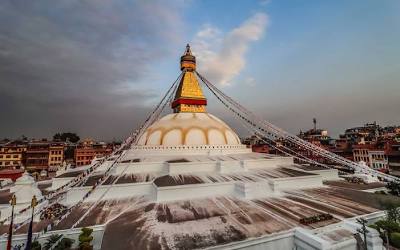
Later visit Boudhanath, the 2500 years old Buddhist stupa in the Valley built in 5th century with four pairs of eyes of Lord Buddha in four cardinal directions keeping an eternal watch over the people and their doings.  You will find Buddhist pilgrims from Tibet going round the stupa spinning the prayer wheels.

In the evening, there will be a farewell dinner for you in a typical Nepalese restaurant with cultural dance and music.

You have the option to extend your trip to continue onto Chitwan jungle safari, rafting adventure, Kathmandu valley shopping tour, scenic Everest flight, mountain biking and other activities.

Overnight at a Hotel. Breakfast and Farewell Dinner included.

The trip concludes – our airport representative will drop you at Kathmandu’s Tribhuvan International Airport for your flight departure from Nepal.

Cost Includes
  • Arrival in International Airport and Departure.
  • Hotel in Kathmandu
  • Entrance fee in National Park.
  • Climbing Peak Permit
  • Kathmandu to Lukla / Lukla to Kathmandu Flight
  • All camping Equipment, two men tents, Dining tent, Kitchen Tent and Mattresses during the Peak climbing.
  • Lodge and Camping Accommodation Breakfast, lunch, dinner in trekking and climbing period.
  • Climbing Sirdar, Sherpa, Cook, Kitchen staffs and porters.
  • Insurance for trekking & Climbing Staff.
  • Climbing equipments and Daily Salary for Staff.
  • Oxygen for Emergency Rescue.
  • Climbing Gears, Fix Rope, Main Rope, Snow Ball, Ice Crop, Rock Piton, High Tent, EPI Gas, EPI Head, Cooking Set etc.
Cost Excludes
  • Personal equipment for Climbing.
  • Personal travel Insurance.
  • Lunch & dinner in Kathmandu.
  • Emergency Rescue evacuation.
  • Personal expenses/Bar bills.
  • Tipping for Expeditions staff.
  • Alcoholic beverages and canned or bottled cold drinks.
  • Extra cost for air cargo, if more than 20 kgs.
  • Extra cost for bad weather or change flight with helicopter
Departure Dates
Useful Info

For a seamless and stress-free experience exploring Kathmandu’s heritage, practical preparation centered around cash, transport apps, and cultural etiquette is essential. When planning your budget, it is important to know that while local mobile banking is common, heritage site ticket booths almost exclusively require physical cash in Nepalese Rupees, with entry fees generally ranging from 200 to 1,000 Rupees for foreign and SAARC nationals. To make the most of your money at the Durbar Squares, you can present your passport and a photo at the site offices to get your single-entry tickets extended into a multi-day pass for free. Navigating between these monument zones can be a challenge due to intense traffic and dust, so avoiding street taxis and instead using local ride-sharing apps like Pathao or InDrive is highly recommended—booking a motorbike ride is the absolute fastest way to cut through the city’s gridlock. You can maximize your time by grouping your visits geographically, pairing the closely situated Pashupatinath Temple and Boudhanath Stupa on one day, and saving the Durbar Squares for another. Finally, respecting local spiritual customs is crucial: always walk around Buddhist stupas and Hindu shrines in a clockwise direction, dress modestly by keeping your shoulders and knees covered, and remember to leave all leather items behind when entering the inner complex of Pashupatinath, as leather is strictly forbidden on the sacred grounds.

FAQs
  • Yes. Each monument zone is managed by its respective local municipality or temple trust, so you must buy a distinct entry ticket at the gate of each site. If you plan to visit a Durbar Square multiple times, you can visit the site office with your passport and a photo to get a multi-day pass extension at no extra charge.

  • Non-Hindus are restricted from entering the absolute innermost golden temple building where the main Shiva Lingam resides. However, you are fully permitted to explore the massive surrounding complex, the stone terraces, the shrines across the river, and the public riverbanks where you can watch the evening Aarati rituals.

  • For both Boudhanath and Swayambhunath, the best times are early morning (6:00 AM – 8:00 AM) or late afternoon (5:00 PM – 7:00 PM). This is when hundreds of local devotees and pilgrims arrive to perform their daily spiritual kora (clockwise circumambulation), filling the air with chanting, butter lamps, and incredible cultural energy.

  • Photography is generally welcomed across all the open-air squares, courtyard spaces, and stupa platforms. However, photography is strictly forbidden inside the inner sanctums of active Hindu temples, inside specific Buddhist monastery prayer halls, and directly facing the Living Goddess Kumari at the Kumari Ghar. Always look for “No Photography” signs or ask a local guide before shooting.

You May Also LikeSimilar Itineraries
Kathmandu Heritage – 3 Days
Difficulty: V-easy 3 Days
Max. Height: 2,782 m

US $120USD